THE OPEN WEST EDGE
Why armyworms hit White Settlement harder than the towns east of it
Because the town runs out into open ground toward Lake Worth and the Naval Air Station, and fall armyworms travel. They build up in unmowed grass and pasture after a wet stretch in late summer, then move as a front, and a White Settlement Bermuda lawn on the west side can be green one evening and stripped to the stems the next morning. The interior streets get them later, if at all.
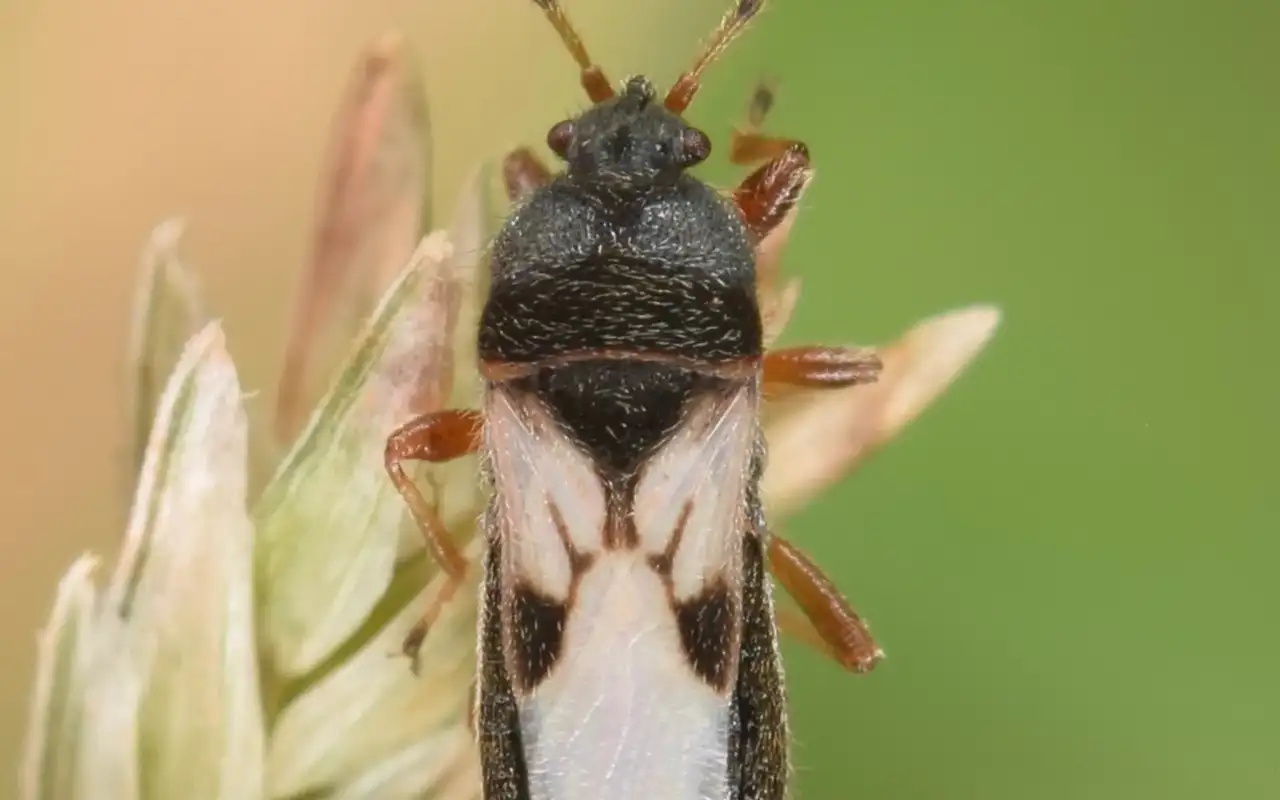
The rest of the year the story is the same as any post-war neighbourhood on settled soil: established Bermuda and St. Augustine, mature shade, and grubs feeding on the roots two to four inches down through late summer. Chinch bugs are the odd one out here, showing up only where somebody has laid fresh sod along a sunny driveway or sidewalk.
WHITE SETTLEMENT PRICING
Lawn insect coverage on a post-war lot: the numbers
A White Settlement house under 1,500 square feet pays $30 a month on Home Defender or $40 on Complete Home & Lawn Defense, and the 1,500-to-3,000 band that holds most of the rest of town is $33 to $38 or $40 to $51.50. The difference between the two plans is reach: Home Defender treats the applicable lawn to about 25 feet from the house, and the Complete plan covers every square foot of grass.
The plans are month to month with no startup fee, and if insects turn up before the next quarterly visit the return trip is covered rather than billed. That warranty between treatments is the part that matters most for armyworms, because they never arrive on schedule. The instant quote at /instant-quote works the same for a White Settlement address as for the Fort Worth addresses in the same 76108 ZIP.
1,500 sq ft or less
$30/mo
Home Defender, lawn treated to about 25 feet
1,500 sq ft or less, Complete
$40/mo
Whole yard, most post-war White Settlement homes
1,500 to 3,000 sq ft
$40–$51.50/mo
Whole yard on the larger houses in town
Every number on this page comes from our published price list. White Settlement homes get the same table as everyone else; the instant quote reads your square footage and lot size and hands you your own line.
READ THIS FIRST
What we will tell a White Settlement homeowner not to pay for
Do not pay to treat a lawn that is simply thirsty. Give the brown patches a week of deep, infrequent soaking, and if they green up the problem was water, which is the case for a large share of July calls. Insect damage does not respond to more water, and that difference is the cheapest diagnostic there is.
Do not upgrade to the whole-yard plan on a small lot until you have measured. On a lot of the compact post-war lots in White Settlement, 25 feet from the walls reaches close to the fence line, and the lawn treatment already on Home Defender covers that ground. The upgrade is for damage beyond the ring, not for reassurance.
And do not expect the treatment to bring back what armyworms already ate. They strip the blades, not the roots, so healthy Bermuda usually regrows on its own once the caterpillars are dead, but a lawn that was already stressed may not. Grub damage is the reverse: roots gone, blades still standing until they collapse, and that patch often needs sod.
WAIT FOR THE VISIT OR CALL NOW
Armyworms versus grubs: the timing is the whole difference
Grubs give you weeks. They feed slowly through late summer, and a check with a spade in August, while the larvae are still small and easy to kill, is the entire plan. Waiting for the next scheduled quarterly visit is fine, and if the count is under five per square foot, no treatment is warranted at all.
Armyworms give you hours. When a front comes across from the open ground west of White Settlement, the right move is to walk out at dusk with a flashlight, confirm the caterpillars on the blades, and call or text us the same evening rather than leaving it for the route. Between-visit calls on a year-round plan are covered, so there is no reason to wait and no charge for not waiting.
DAY ONE ON YOUR LAWN
How a first visit goes on a White Settlement lawn
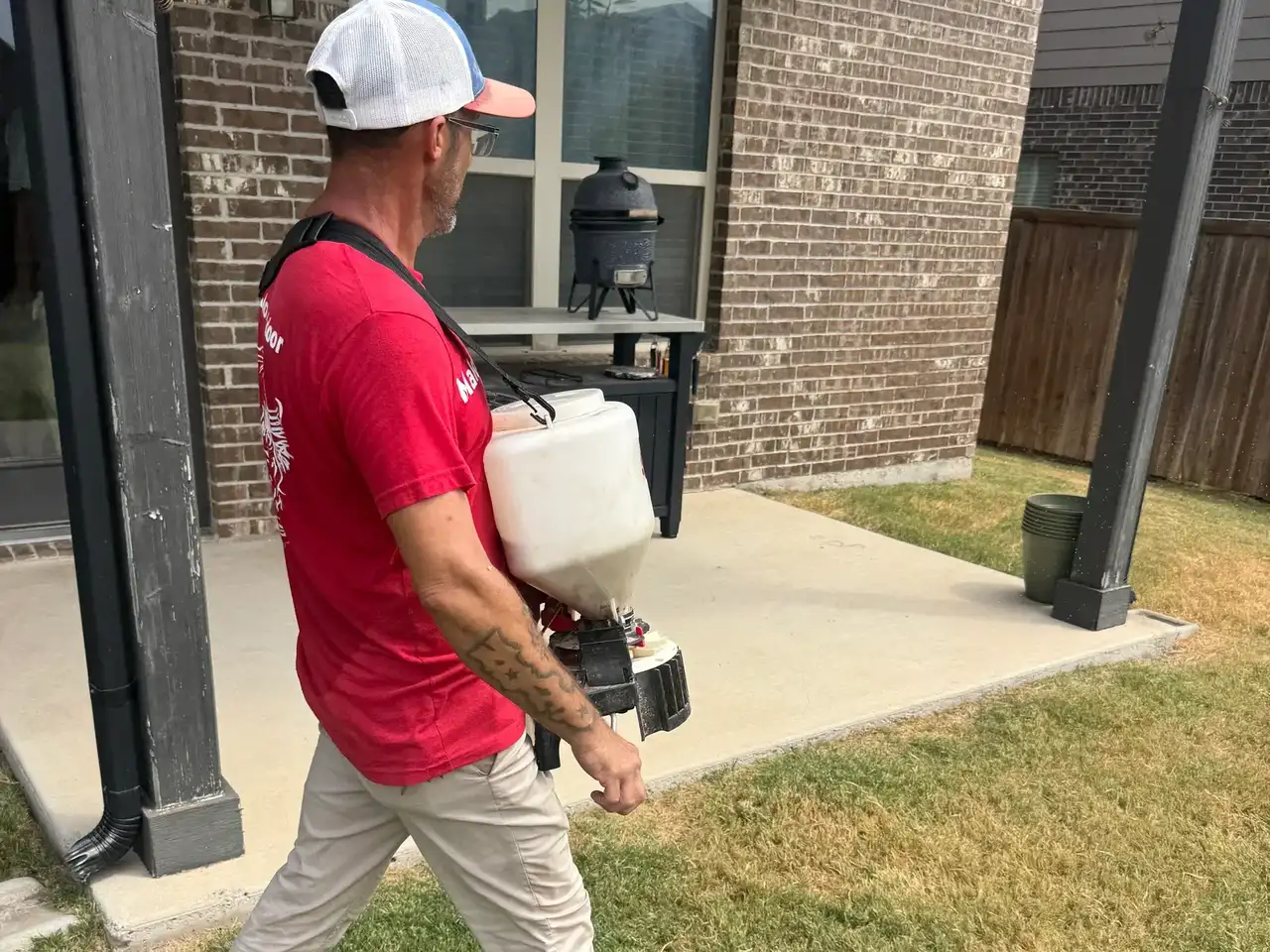
Which way does the lot face
We start by asking what the back fence borders. A lot backing open ground or unmowed grass on the west side is the one we watch for armyworms in late summer, and it may want a treated edge rather than just the lawn.
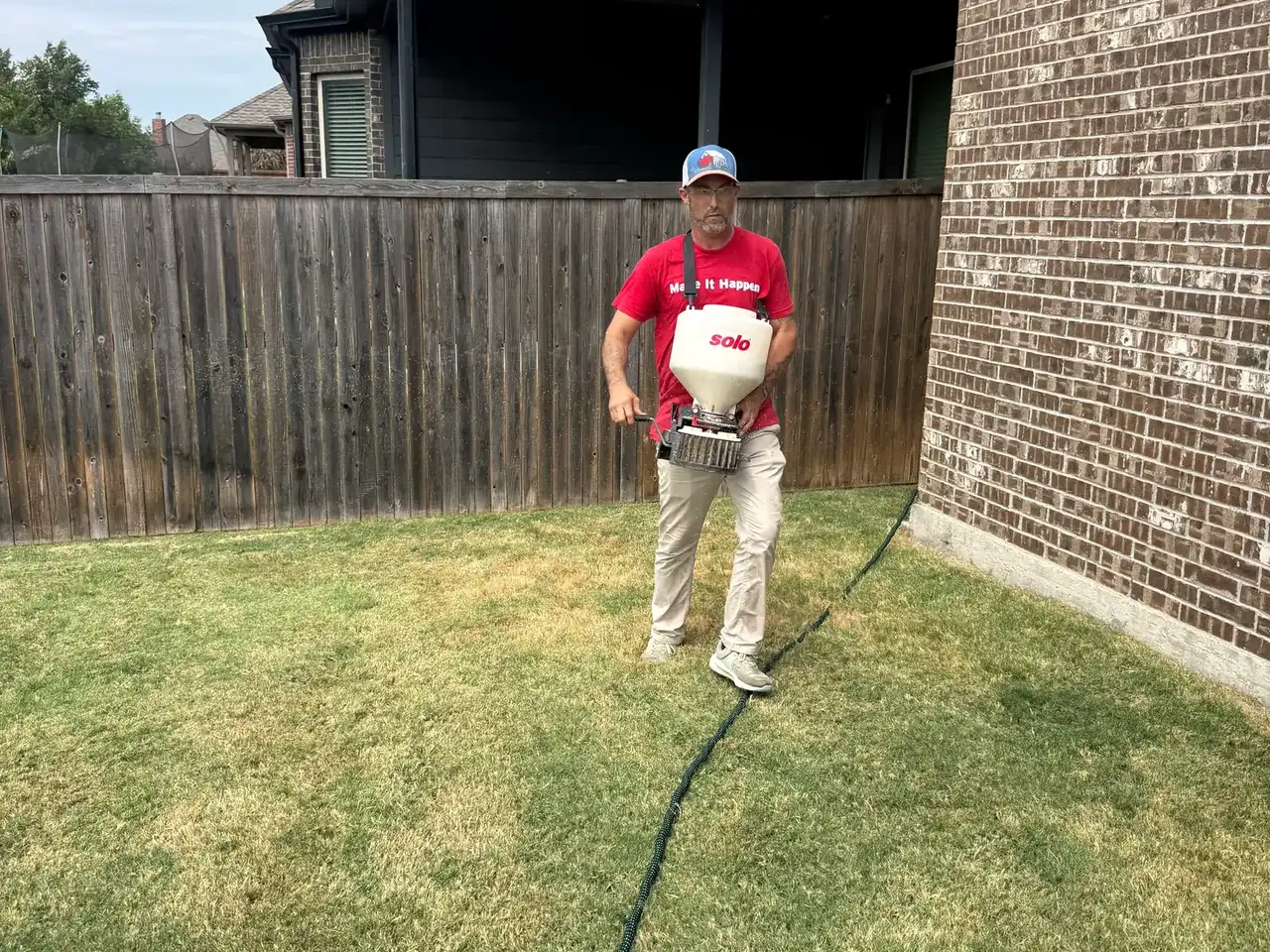
Lift and count
On the settled older turf we press for softness, lift a corner at the edge of any brown and count larvae in a square foot. Under five is normal for any lawn in town and does not get treated.
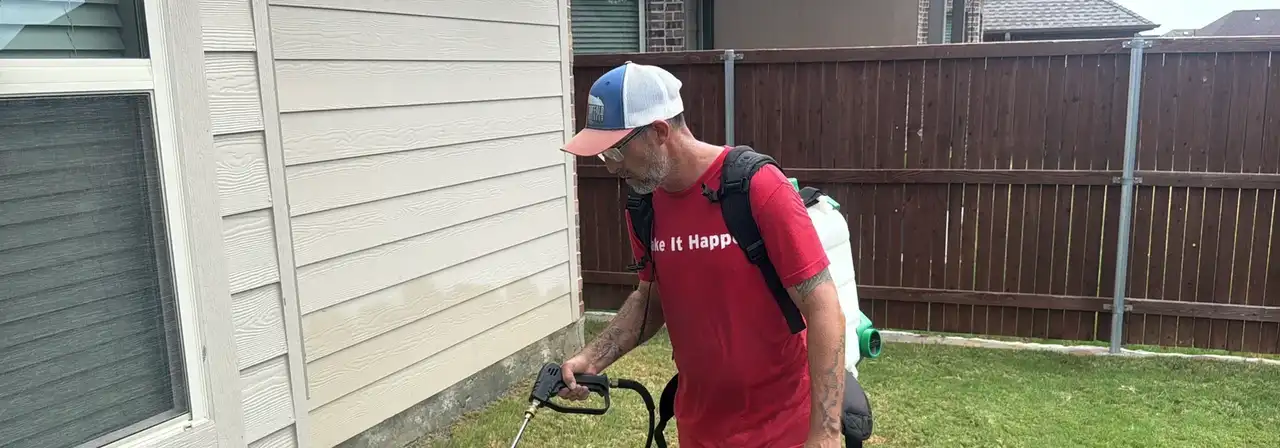
The rest of the year-round plan
Because lawn coverage comes with the plan rather than on its own, the same trip treats the eaves and foundation, dusts the weep holes in the brick with Delta Dust and puts fire ant bait across the yard. On post-war brick, that exclusion look is where a lot of the value sits.