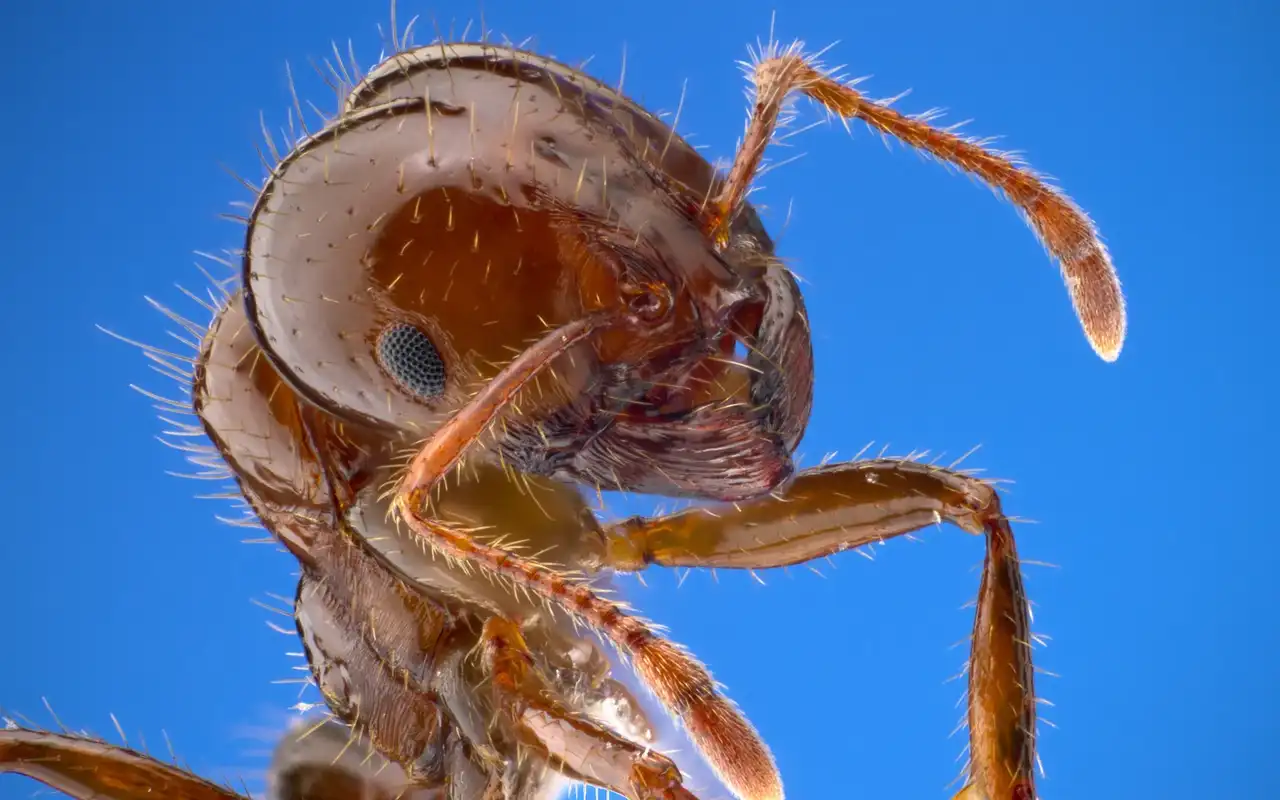
THE FIRE ANT CAPITAL
Why a three-year-old Haslet yard out-mounds a fifty-year-old one
When a Haslet subdivision goes in, the graders strip the topsoil, compact the clay and kill off every ant species that was living there. Fire ants are the first to move back into that empty ground, and with no competition they spread across a new addition faster than anywhere else on our map.
That is the whole story behind the mounds in your builder-installed St. Augustine. It is not bad luck and it is not something you did wrong. The pressure eases as the soil settles and other insects return, but for the first several years a Haslet yard off Intermodal Parkway or Avondale Haslet Road needs the whole yard baited, not just the mounds you can see.
WHAT HASLET PAYS
Fire ant control is free with the plan, so what does the plan cost?
Both year-round plans include whole-yard broadcast bait, and both are priced on the square footage of the house. Haslet's new builds skew large, so most homes here fall in the 3,000 to 4,500 band: $38 to $46 a month on Home Defender or $51.50 to $62 on Complete Home & Lawn Defense.
A 2,600-square-foot home comes in at $33 to $38 and a 5,000-square-foot one at $46 to $54 on Home Defender. Anything over 6,000 square feet is quoted individually. There is no startup fee and no contract, and you get the number before you decide anything.
1,500 to 3,000 sq ft
$33–$38/mo
Home Defender, bait included
3,000 to 4,500 sq ft
$38–$46/mo
Where most new Haslet builds land
4,500 to 6,000 sq ft
$46–$54/mo
$62–$73.50 on the whole-yard plan
Over 6,000 sq ft
Quoted
Ask before you assume
Every number on this page comes from our published price list. Haslet homes get the same table as everyone else; the instant quote reads your square footage and lot size and hands you your own line.
THE HARD PART
What fire ant bait cannot do in a town that is still being built
It cannot outrun the construction. Every new phase graded next door releases another wave of queens, and a treated Haslet yard will pick up new colonies from the bare lots around it. The bait handles them as they arrive, but the yard is never permanently done until the neighbourhood is.
It cannot work fast. Three weeks is a normal wait for the mounds to collapse, because the granules have to be carried down to the queen. If you need a mound gone today because of a birthday party, a drench will flatten it, and then it will most likely reappear a few feet over.
And it cannot fix the chinch bugs that often arrive alongside the ants in young builder turf. Brown patches along the driveway that more water does not cure are a different problem, one the Complete Home & Lawn Defense plan covers and Home Defender only treats out to 25 feet.
NOW VS LATER
Treat a new Haslet yard before the mounds show up, or wait?
Before, and by a wide margin. A broadcast application in early spring, while colonies are small and foraging hard, keeps a new Haslet lawn usable all summer for a fraction of the effort it takes to knock down an established population in July.
Waiting is what most new homeowners do, because a lawn with no visible mounds does not look like it has a problem. By the time a dozen mounds appear after the first big rain, the colonies have been there for months. Starting the plan when you move in means the bait is already down when the queens arrive.
FIRST VISIT ON A NEW BUILD
What the first appointment in Haslet looks like
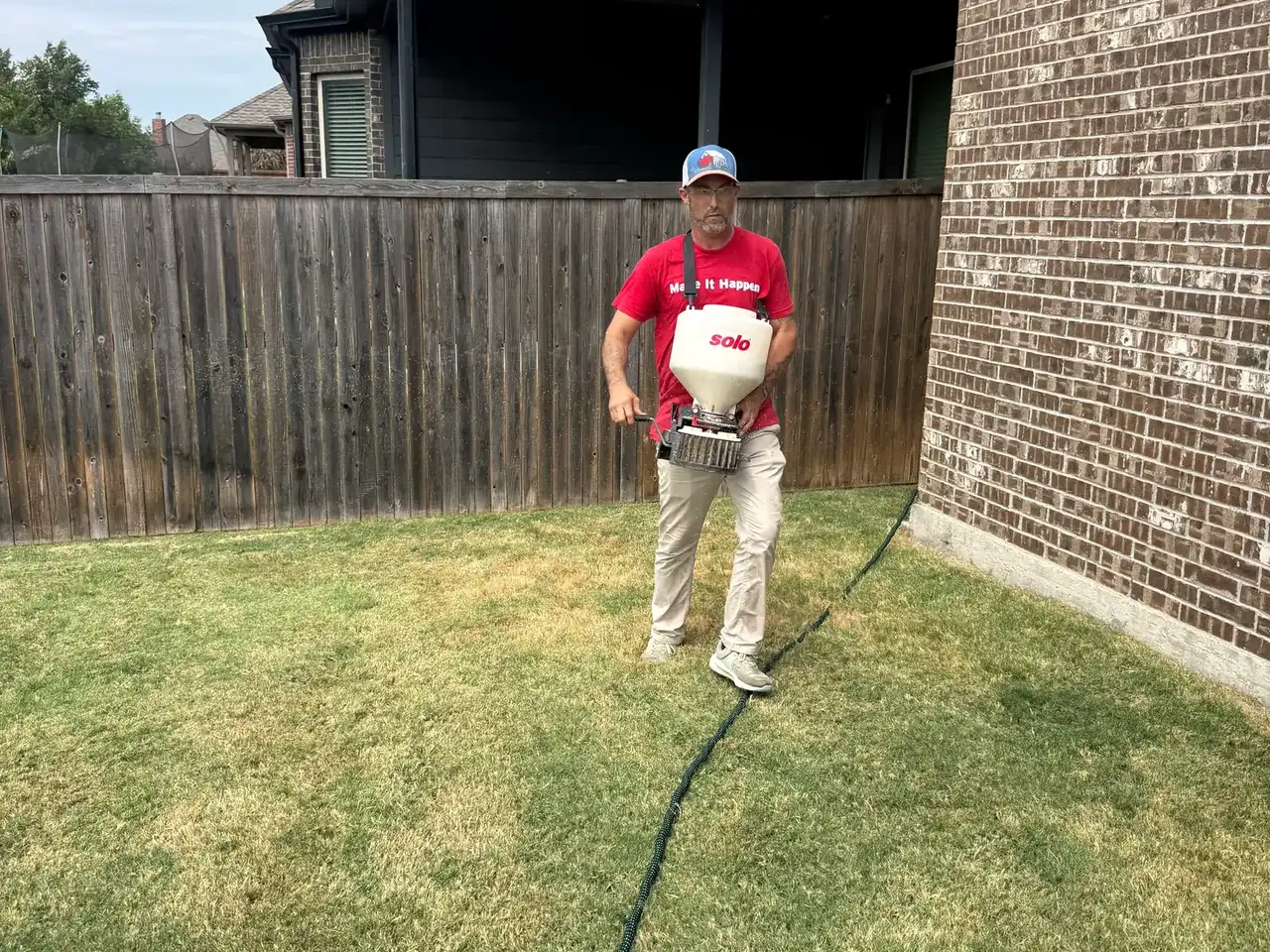
Reading the lot
New Haslet yards are mostly open and sunny, so nearly the whole lot is fire ant habitat. We check the sod seams and the strips along the sidewalk, where the soil was disturbed most recently, and note any mounds already up.
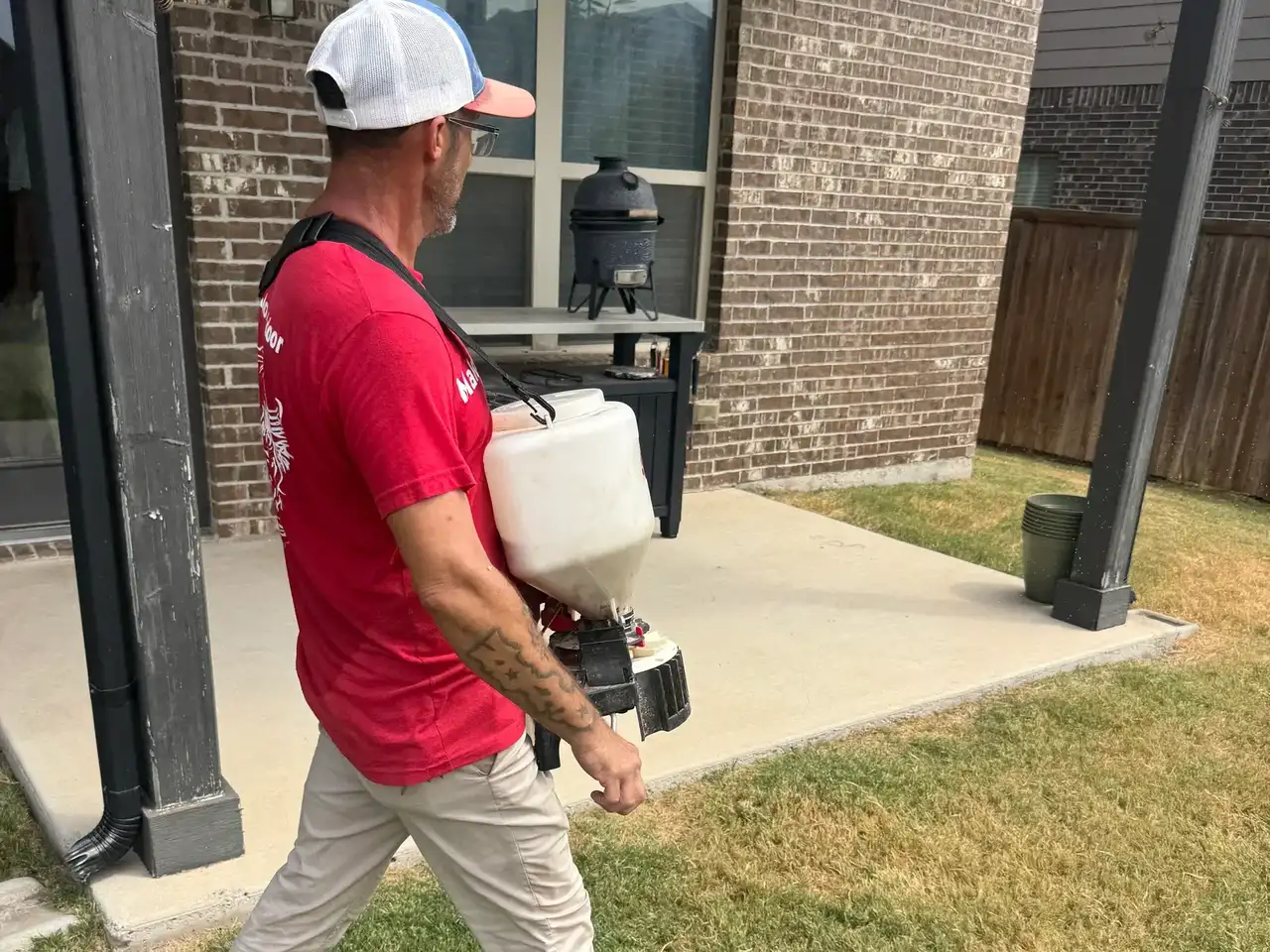
The spreader, not the jug
Bait goes across the entire yard at a light rate with a broadcast spreader. We schedule around the forecast so the granules get about 24 dry hours to be collected before rain can spoil them.
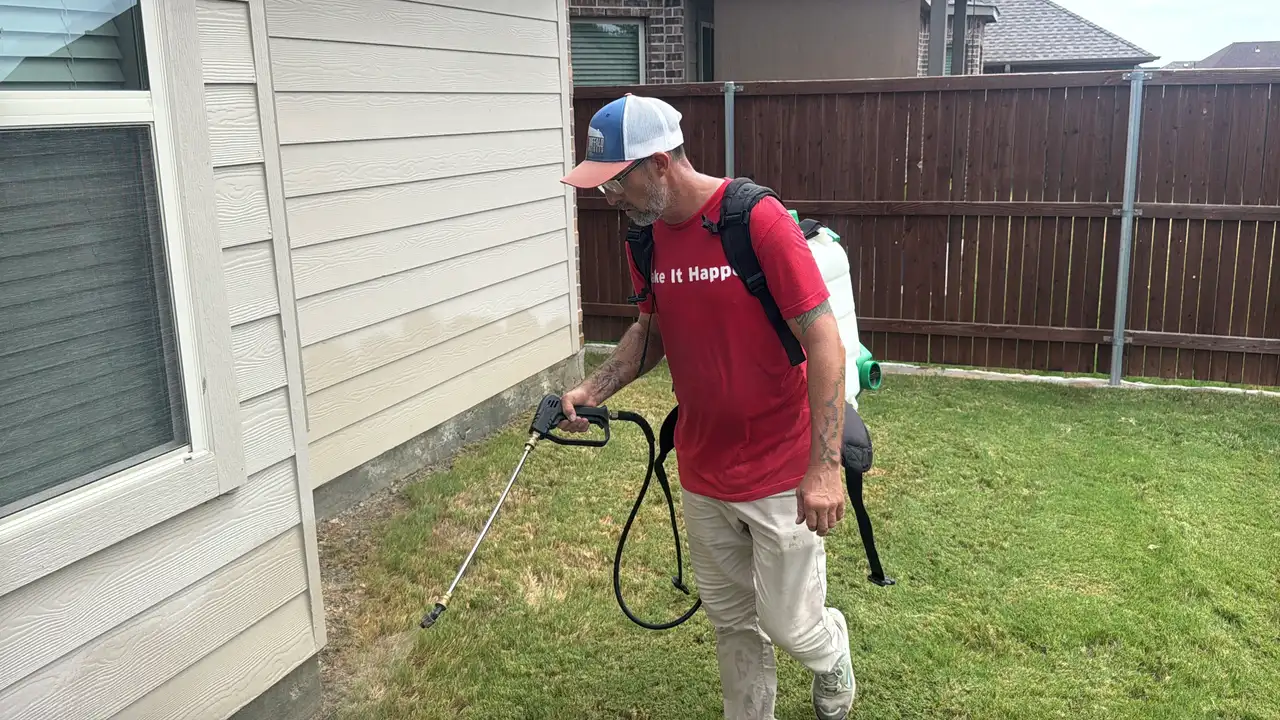
The rest of the house
Since you are on a year-round plan, the perimeter band, the eaves and Delta Dust in the weep holes happen on the same visit. New brick has weep holes too, and they are open from day one.