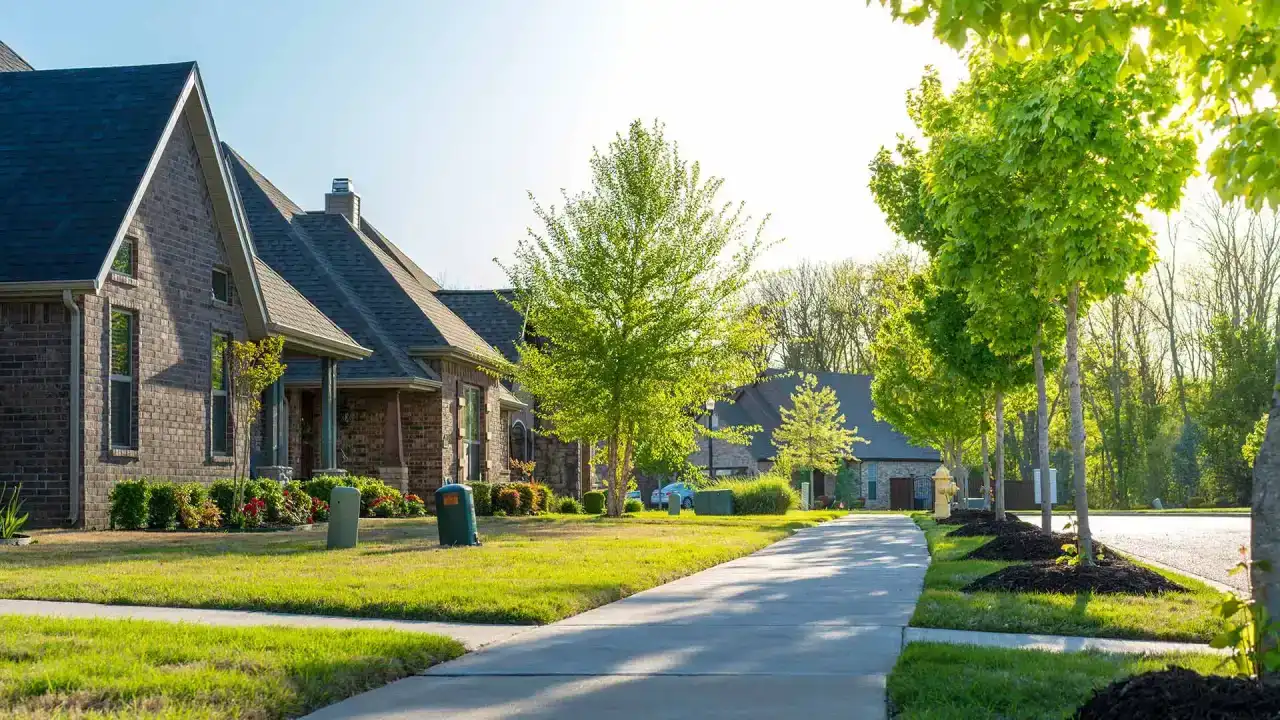
NEW HOUSES, OLD PROBLEM
Can a two-year-old Haslet house really have rats?
Yes, and it happens more than people expect. Haslet is almost entirely new construction off Intermodal Parkway and Avondale Haslet Road, and every subdivision that goes in displaces whatever was living in the pasture. The rats and field mice do not leave the area; they move into the closest structure with an opening.
New houses have plenty of openings, just not where the older Fort Worth brick has them. The corners of the garage door, the hole where the AC line set goes through the wall, a dryer vent with no flap and the water-heater closet vents are usually open from move-in day. The weep holes are new and clean, which makes them easy to find and easy to use.
On a Haslet build, the exclusion is often quick because the gaps are few and obvious. The trapping comes second, and the follow-up confirms nothing chewed back in.
COST ON A NEW BUILD
What the Haslet rodent add-on costs
Rodent control is $25 a month on top of either year-round plan. Most new Haslet houses fall between 1,500 and 3,000 square feet, which puts Home Defender at $33 to $38, so the combined bill is $58 to $63 a month. The larger two-story builds in the 3,000 to 4,500 range are $38 to $46, or $63 to $71 with rodents.
Since fire ant treatment is already part of both plans and fire ants are the number one Haslet pest, most customers here are on a plan anyway; the rodent line is the add-on when the noise in the attic starts. It cannot be bought alone, there is no contract, and there is no startup fee.
Rodent add-on
$25 a month
Never sold without a year-round plan
Home Defender, 1,500–3,000 sq ft
$33–$38 a month
Most of the new Haslet additions
Home Defender, 3,000–4,500 sq ft
$38–$46 a month
The larger two-story builds
Complete Home & Lawn Defense, 3,000–4,500 sq ft
$51.50–$62 a month
Whole-yard version, fire ants and chinch bugs covered
Every number on this page comes from our published price list. Haslet homes get the same table as everyone else; the instant quote reads your square footage and lot size and hands you your own line.
THE HARD PART
What rodent control cannot do on a Haslet lot
It cannot stop the field from being developed. When the tract behind your fence gets graded, a wave of displaced rodents tests every house on the street for a few weeks. Good exclusion means they test yours and move on; it does not mean you will never see one on the fence.
It cannot fix builder gaps that are your warranty's job. If the garage door was hung a half inch out of square, the seal will never close and we will tell you to call the builder before you pay us to trap around it. The same goes for a missing dryer-vent flap or an open soffit.
And it is not a spray. We hear from Haslet homeowners who were told a perimeter treatment would take care of the mice. It will not, because nothing in it repels a rodent. If the entry is open, the mouse walks over the treated slab and in.
PLAN VERSUS PLAN
Home Defender or Complete Home & Lawn Defense under the rodent add-on?
For the rodent work itself, it makes no difference; the $25 add-on is identical on both. The choice is about the yard. Home Defender treats the perimeter, the eaves and 25 feet out, four times a year, with fire ant treatment included. Complete Home & Lawn Defense treats the entire yard, which on a Haslet lot with young St. Augustine and chinch bugs is often worth the difference, which runs from $7 to $16 a month depending on house size.
If your only complaint is mice in the garage, Home Defender plus the add-on is the cheaper route and it does the whole rodent job. If you also have fire ant mounds after every rain and brown patches along the driveway, the whole-yard plan is the one to pair it with.
WHAT WE CHECK FIRST
The first visit on a new Haslet house
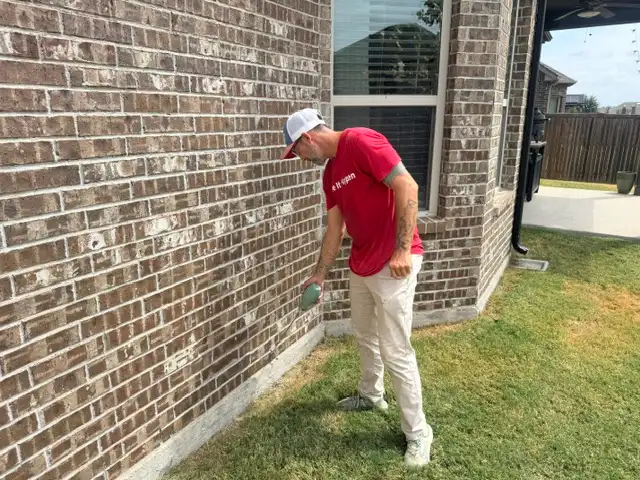
Garage door and ground-level gaps
The garage-door corners and the bottom seal are the first stop on a new build, then the AC line set, the hose bibs and the dryer vent. We show you each gap in daylight so the homeowner fixes are obvious.

Weep holes and the roof edge
New brick has clean, open weep holes, and we check each for use. On a two-story Haslet build we also look at the gap where the roof meets the brick, a common route on houses with unfinished flashing.
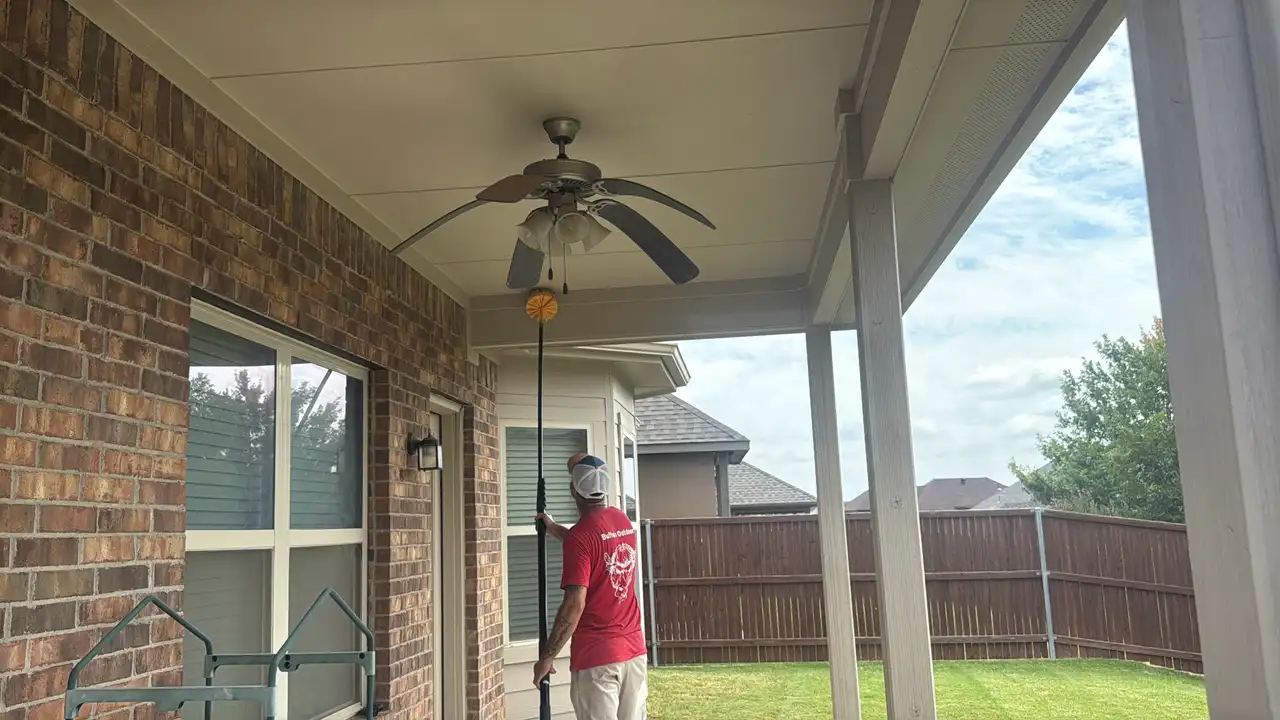
Attic, traps and follow-up
Inside we look for runways in the blown insulation and place traps or locked stations on them. Before we leave, the follow-up date is set and you know exactly which openings we sealed.