UNDER THE CANOPY
Why a North Richland Hills yard usually has fewer mounds than one in Haslet
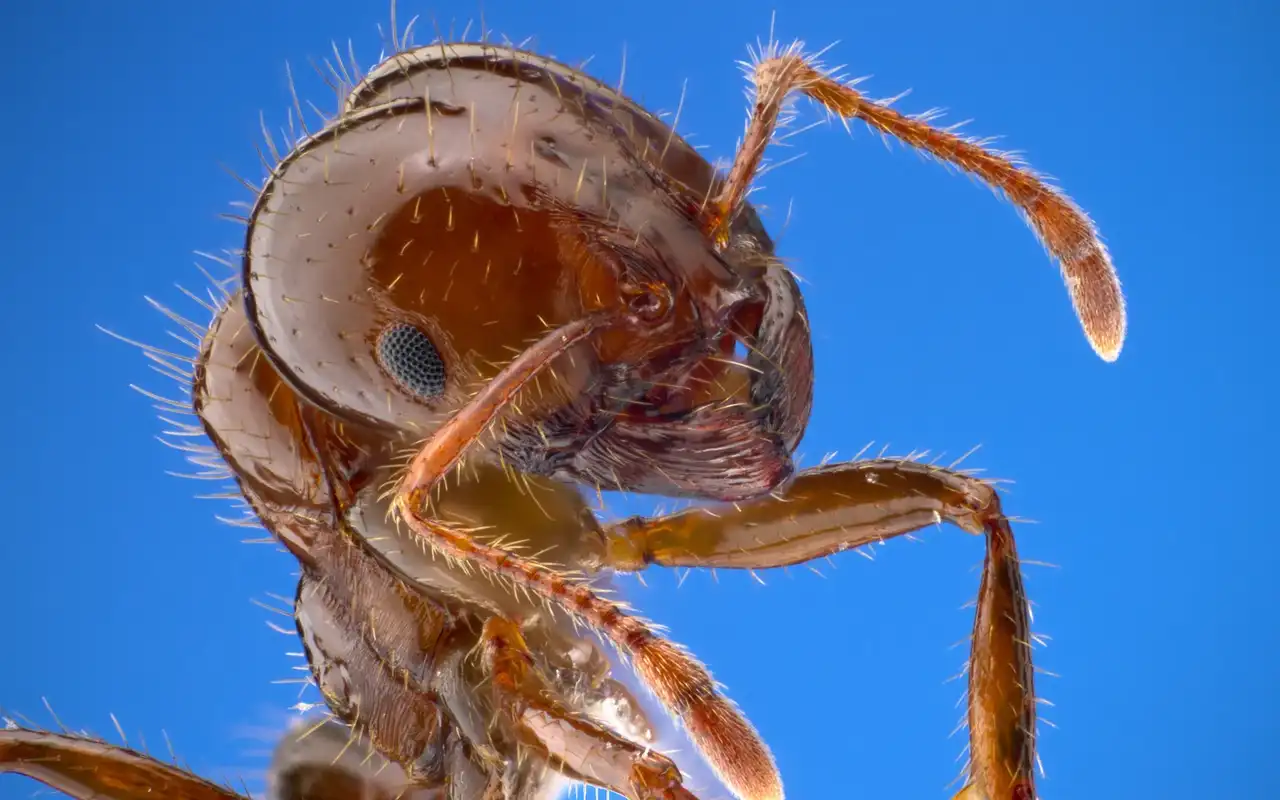
Fire ants want sun and freshly turned dirt, and most of North Richland Hills offers neither. The neighborhoods around Smithfield and Iron Horse went in during the 1970s and 80s, so the clay has had decades to settle and the oaks and elms keep the ground cool. Cool, settled soil already belongs to other ant species, and they hold it.
That leaves the sunny gaps: a south-facing front lawn, the strip along the driveway, the open turf where a tree came down. Yards backing onto the drainage channels through NRH see a second pattern, because a channel that runs after a storm floods the low ground and pushes any colony there up into a fresh mound.
WHAT IT ADDS TO THE BILL
Fire ant control is folded into the plan, and here is what the plan costs in NRH
You do not pay a separate line for fire ants; both year-round plans carry the bait at no extra charge. What you pay for is Home Defender, priced on the square footage of the house, and a typical 1970s or 80s brick home in 76180 or 76182 lands in the $33 to $38 or $38 to $46 band.
The whole-yard plan, Complete Home & Lawn Defense, adds lawn insect and chigger treatment across the entire lot and runs $40 to $73.50 depending on the house. Nobody signs anything, and the monthly figure is yours to see at /instant-quote before we set a date.
Home up to 1,500 sq ft
$30/mo
Smaller Smithfield-area houses
1,500 to 3,000 sq ft
$33–$38/mo
The common NRH band, fire ants included
3,000 to 4,500 sq ft
$38–$46/mo
Larger homes north of Davis Boulevard
Whole-yard plan, same sizes
$40–$62/mo
Complete Home & Lawn Defense
Every number on this page comes from our published price list. North Richland Hills homes get the same table as everyone else; the instant quote reads your square footage and lot size and hands you your own line.
THE FINE PRINT
Three things that will frustrate you if nobody warns you
Broadcast bait is slow on purpose. Workers have to find the granules, haul them underground and feed them to the queen, and a colony stays visibly active until she is gone, which takes anywhere from several days to a few weeks.
Rain will make you doubt us. After a soaking storm the lower chambers fill with water and the ants build upward, so a yard that looked clean on Tuesday can have three mounds on Friday. Those were existing colonies becoming visible, and they are covered under the warranty between scheduled visits.
Bait does nothing for the ants marching through your weep holes. In an older North Richland Hills brick home the ants in the kitchen are almost never fire ants; the fix for them is the foundation band and Delta Dust in the weep holes, the other half of the same Home Defender visit.
DRENCH OR BROADCAST
Mound-by-mound drenching versus bait across the lot
Drenching wins on the day you do it and loses within two weeks. Pouring product directly on a mound kills what is near the surface, the survivors carry the queen sideways, and the homeowner ends up chasing mounds around a North Richland Hills front yard all summer.
Broadcast bait is boring to watch and it works. Because it goes across every square foot of turf at a light rate, it reaches the colonies you have not spotted yet. If you want to DIY, buy a broadcast bait rather than a mound killer, spread it in early spring or fall, and pick a day with no rain and no sprinklers for the next 24 hours.
WHAT HAPPENS FIRST
How the first visit runs on an NRH lot
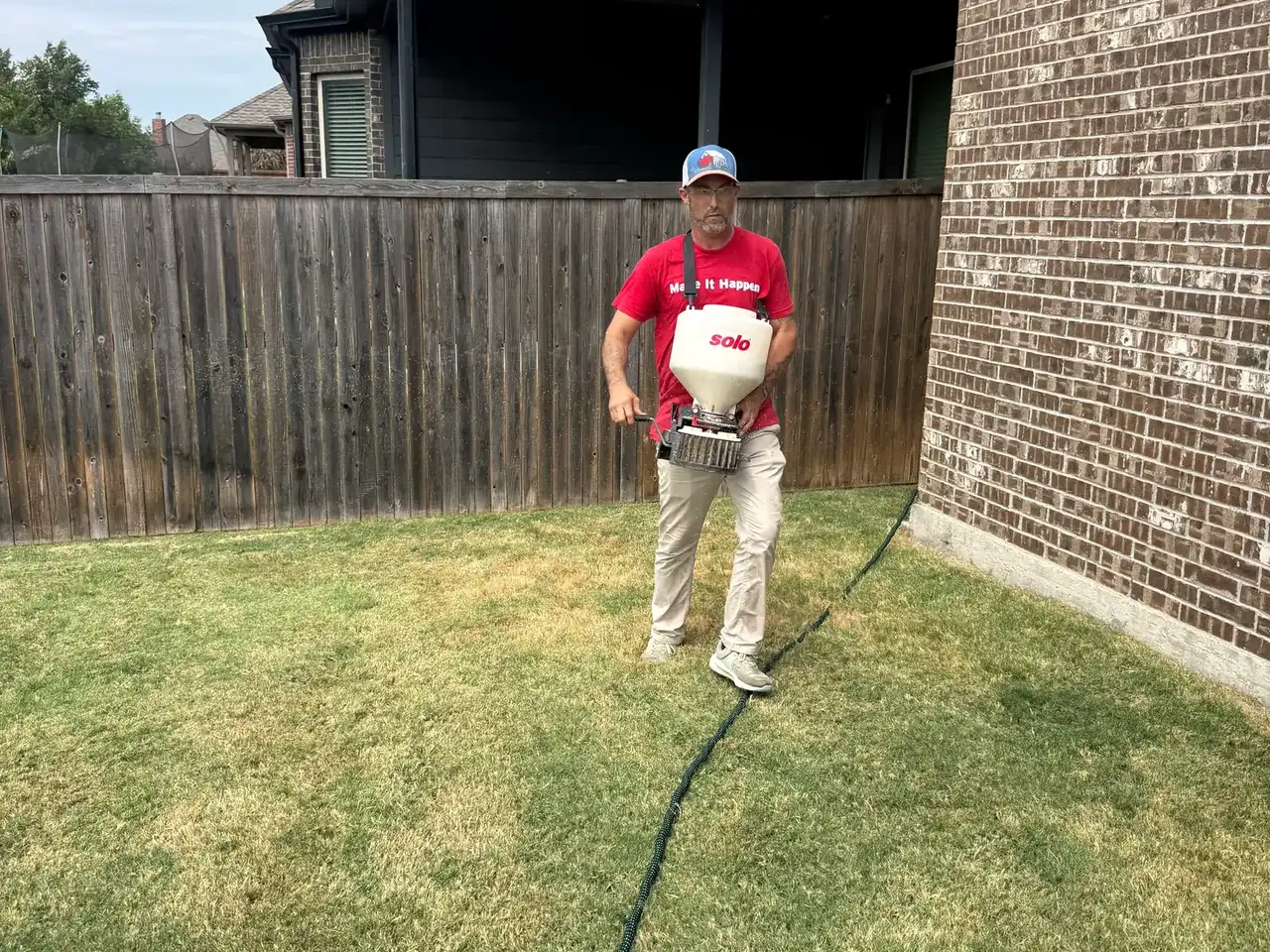
Find the sun
We start by walking the yard and marking where the canopy opens up, because on a shaded Iron Horse-area lot the sunny pockets are the only places fire ants will settle. If your lot touches one of the drainage channels, the low side gets extra attention.
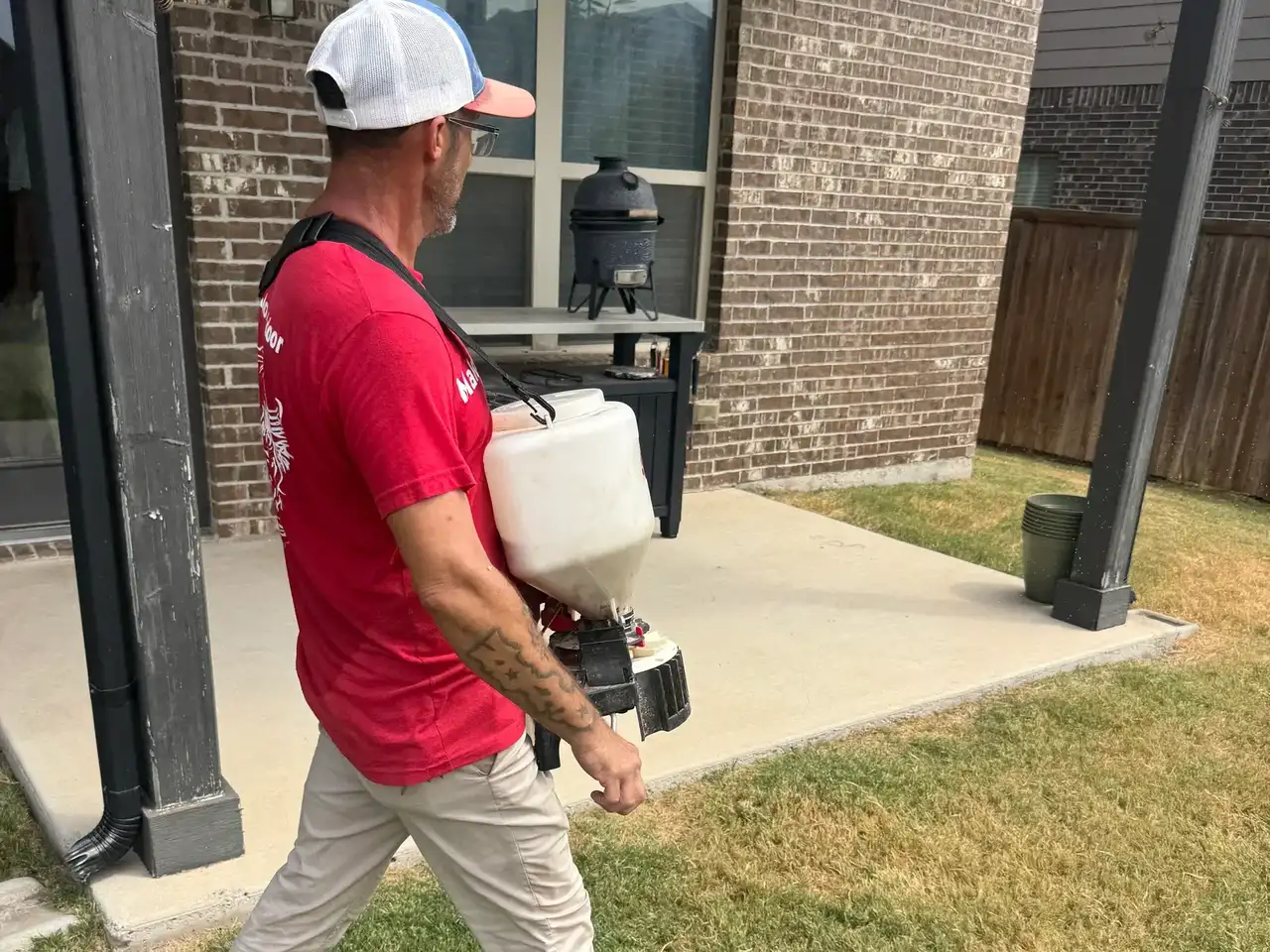
Spread, then leave it alone
The bait goes down across the full lot with a broadcast spreader, and we ask you to hold the sprinklers for about a day so it stays dry long enough for the foragers to collect it. Your St. Augustine or Bermuda will not notice it was there.
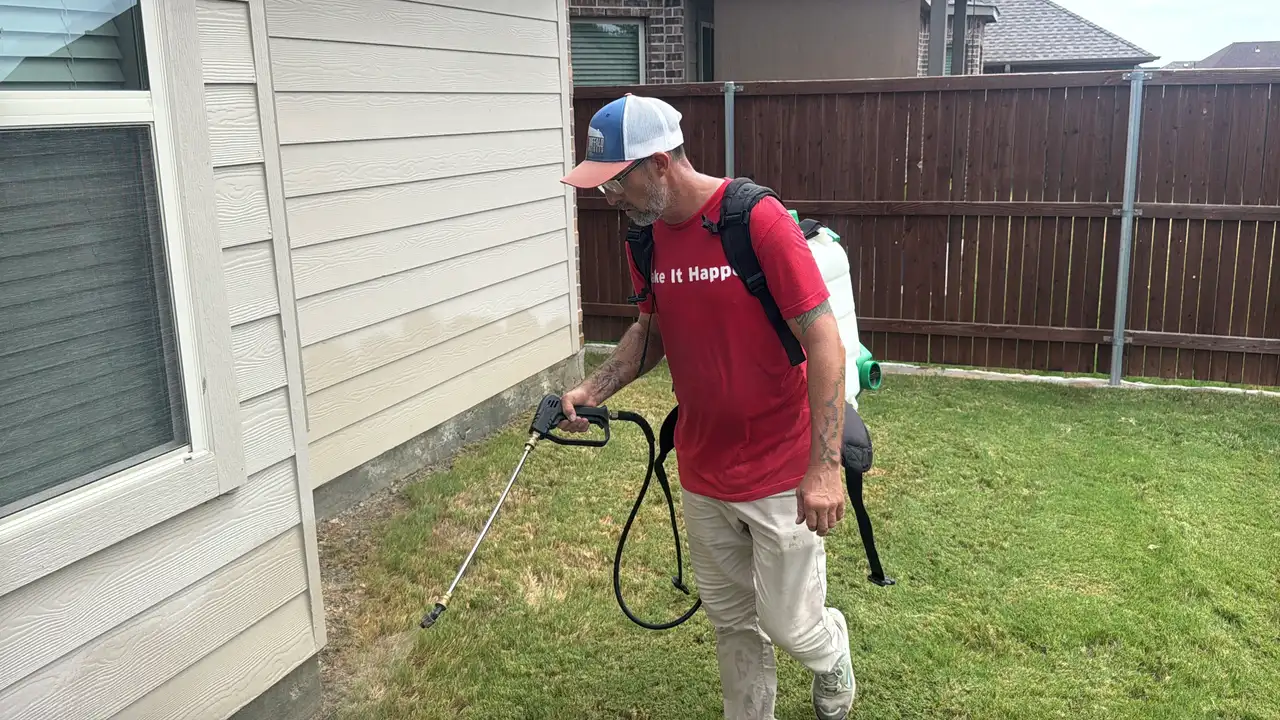
The brick gets treated on the same stop
Since this is a Home Defender visit, the perimeter, the eaves 25 feet out and the weep holes are handled while we are there. On 1970s brick that part is usually the reason an NRH homeowner called in the first place.