RATS AND MICE IN NRH
What is getting into North Richland Hills attics, and how?
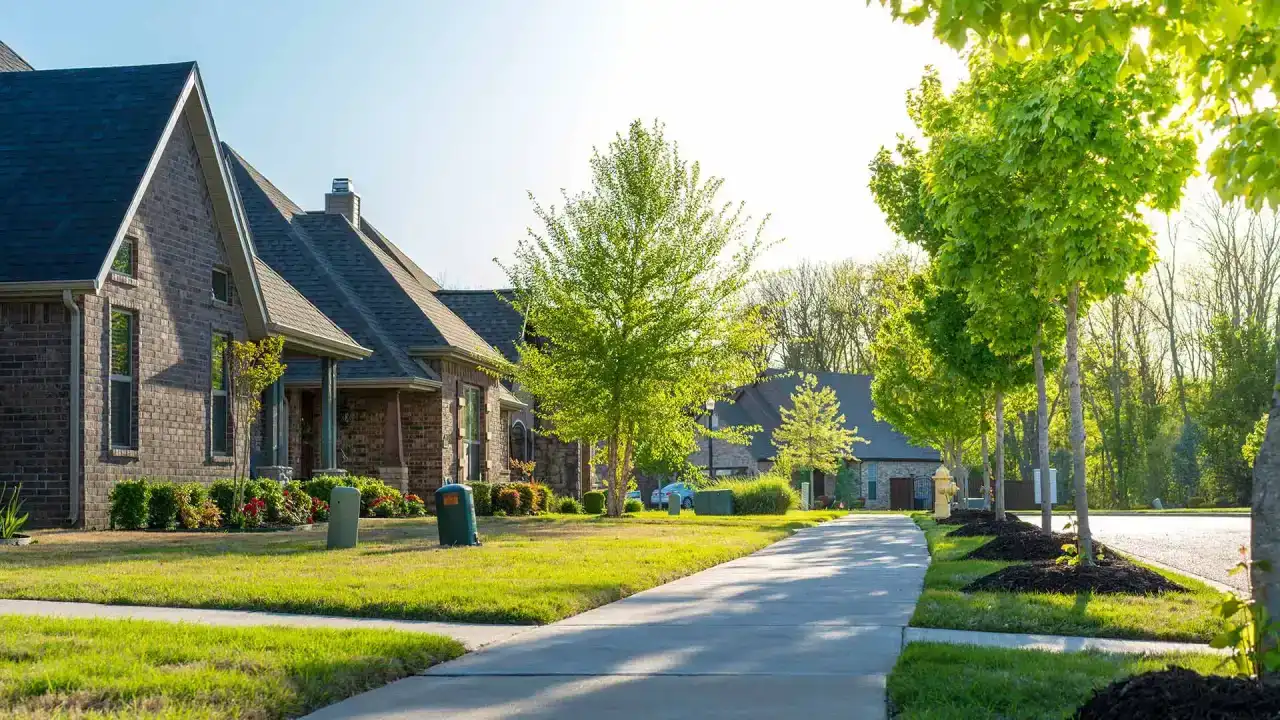
Mostly roof rats using the trees, and house mice using the bottom course of brick. The neighborhoods around Smithfield and Iron Horse went up in the 1970s and 80s, so the oaks and elms have had four decades to reach the gutters and the weep holes have had the same four decades to lose their mortar edges. A rat that can reach the fascia from a limb, or a mouse that can squeeze a half-inch weep hole, is inside before you know the house has a gap.
The drainage channels that thread through North Richland Hills matter too. They are wet, overgrown and undisturbed, which lets rodents live there all summer, and every yard that backs onto one gets tested when the weather turns. Lots along the Iron Horse corridor and the golf course edges, where the rough is never mowed, see the same thing.
So the work here is not mysterious: we find the openings in use on your house, close them, trap what is already inside and come back to check. The channel behind you stays the channel; your wall stops being a door.
THE NUMBER FOR NRH
Twenty-five dollars a month, riding on a year-round plan
Rodent control in North Richland Hills costs $25 a month, and it is only ever sold as an add-on to Home Defender or Complete Home & Lawn Defense. A typical 1980s NRH house of 1,800 to 2,400 square feet sits in the 1,500 to 3,000 band, which makes Home Defender $33 to $38, so you are looking at $58 to $63 a month all in.
The smaller original ranches around Smithfield, under 1,500 square feet, drop the base plan to $30 and the total to $55. Nothing about the rodent price changes with the house; what changes is how many weep holes need copper mesh and how long the first visit takes. You will have the full figure before anyone books a visit, and the instant quote on our site does the same math if you would rather not call.
Rodent add-on
$25 a month
Rides on either year-round plan; not sold alone
Home Defender, up to 1,500 sq ft
$30 a month
The smaller original ranches near Smithfield
Home Defender, 1,500–3,000 sq ft
$33–$38 a month
Most 1970s and 80s houses in NRH
Complete Home & Lawn Defense, 1,500–3,000 sq ft
$40–$51.50 a month
Same add-on, whole yard treated too
Every number on this page comes from our published price list. North Richland Hills homes get the same table as everyone else; the instant quote reads your square footage and lot size and hands you your own line.
WHERE IT STOPS
What the rodent add-on cannot do for a North Richland Hills house
It cannot dry out the drainage channel or mow the golf course rough. Those are city, HOA or course property, and they will keep producing rodents whether your house is sealed or not. What exclusion does is make your house the one they walk past.
It also does not include the tree trimming, and on canopy streets in NRH that is often the most important repair. A pecan limb resting on the shingles is a bridge to the attic that no ground-level sealing addresses. We will show you the limb; getting it cut is on your side, along with a garage-door seal that shows daylight.
And it will not be instant. Insects die within days of a perimeter treatment, but rodent work is an inspection, a sealing visit, a trapping period and then a follow-up, and a house that has been open for years can take a few weeks to go quiet. If anyone tells you a spray will handle mice in an NRH attic, they are describing a product that does not exist.
FOAM VERSUS COPPER MESH
Sealing it yourself against having us do the exclusion
A can of expanding foam and a bag of steel wool will close a hole, and if you have found the one hole a mouse is using, that is a fair fix for a few dollars. The trouble is that foam is chewable, steel wool rusts away inside a damp weep hole within a season or two, and most people seal the hole they can see rather than the one the animal uses.
Our exclusion uses copper mesh in the weep holes because it does not rust and rats will not chew through it, and it starts with an inspection that looks for rub marks and droppings rather than guessing. On a forty-year-old NRH brick house with sixty or eighty weep holes, knowing which six are in use is the whole job. Do the DIY version if the problem is one mouse and one obvious gap; call us when it keeps coming back.
WALKING THE HOUSE
What the first North Richland Hills inspection covers
Canopy, gutters and roof edge
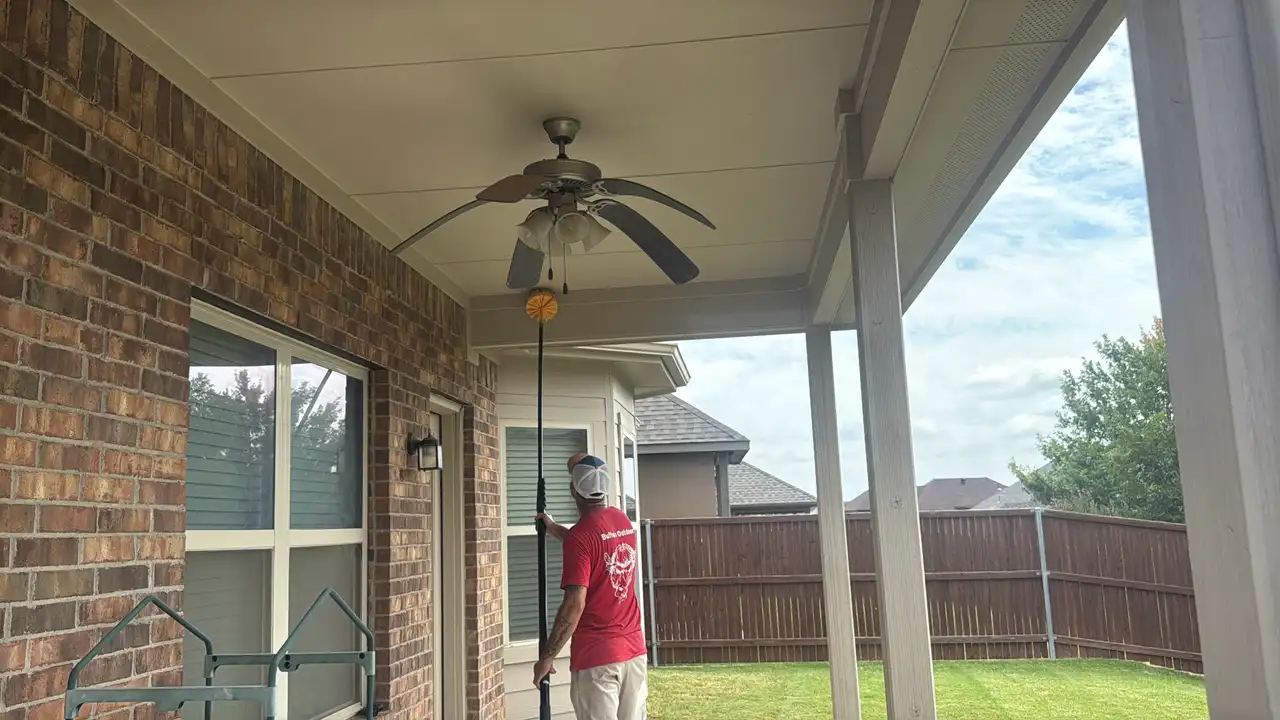
On the Iron Horse and Smithfield streets the trees come first. We look for limbs on the roof, rub marks on the fascia and gaps where the gutter meets the soffit, because that is the roof-rat route on a 1980s two-story.

The weep holes, one by one
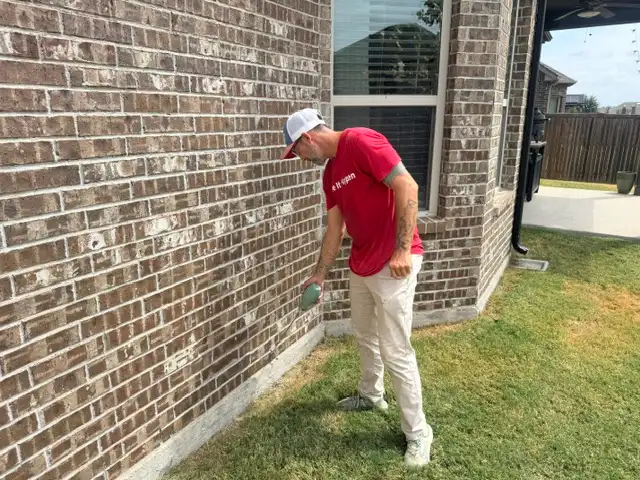
Every weep hole gets a look for grease, droppings and chewed brick. The ones in use are packed with copper mesh as part of the exclusion; the rest keep getting Delta Dust on the regular plan visits, which is part of the plan price.
Garage, penetrations and the attic
Garage-door corners, the AC line set, the dryer vent and the water-heater closet are the ground-level suspects. Inside, the attic insulation shows us the runways, and that is where the traps and locked stations go.