SHADE DECIDES THE INSECT
What is eating an established NRH lawn?
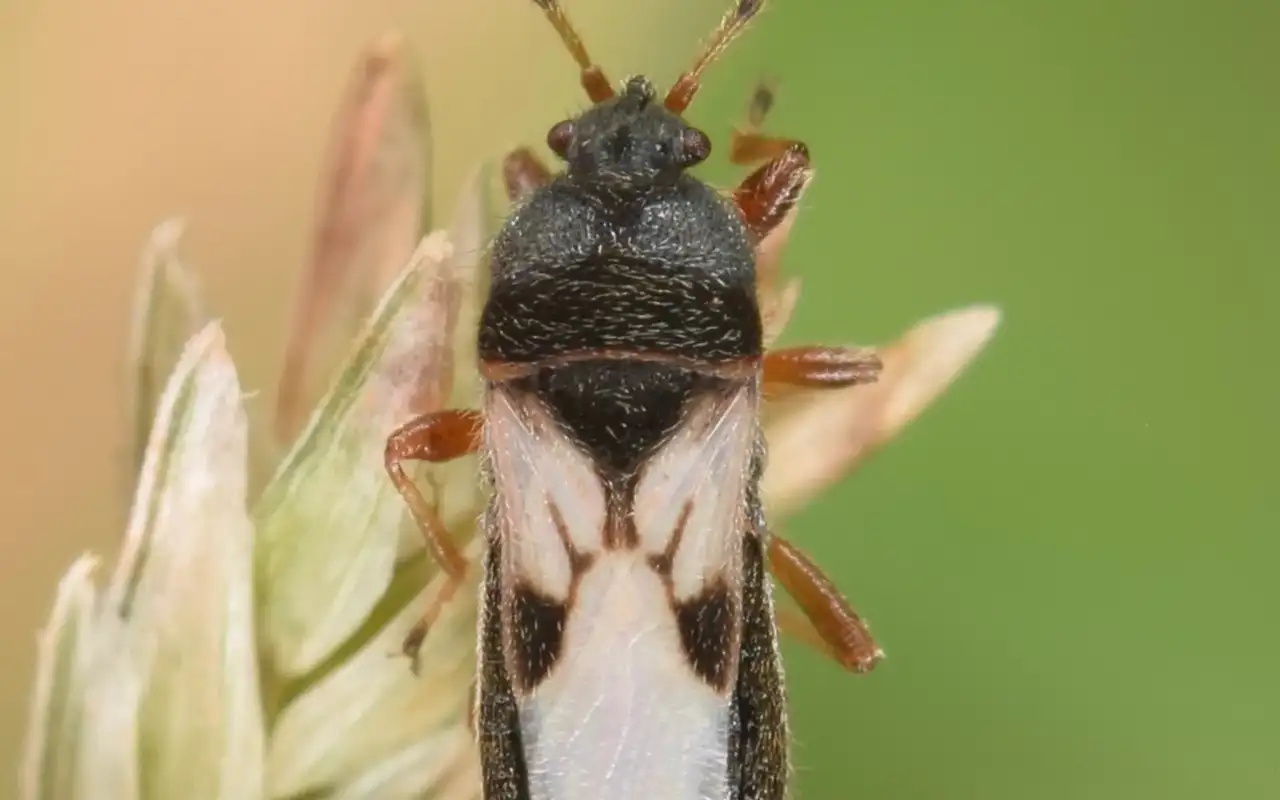
Usually grubs, not chinch bugs, and the trees are why. North Richland Hills was built out in the 1970s and 80s, and the oaks and elms around Smithfield and Iron Horse are now big enough to keep most back yards cool and dim. Chinch bugs want blazing, dry St. Augustine, so under that canopy they struggle. Beetle larvae chewing roots from below do not care about shade at all.
The exception is the front. Many North Richland Hills lots have a sunny front lawn split by a driveway and a sidewalk, and that concrete radiates heat into the turf next to it. St. Augustine along those strips can be the only place on the property where chinch bugs take hold, while the back yard has a completely different problem.
Both insects produce brown grass in summer, and so do drought, disease and compaction from decades of foot traffic. We test before we treat, because spreading an insecticide on a fungal problem in a 76180 back yard wastes your money and does nothing for the lawn.
PRICED ON THE HOUSE
Monthly cost for North Richland Hills homes
The whole-yard program, Complete Home & Lawn Defense, costs between $40 and $73.50 a month depending on the square footage of the house. A good share of North Richland Hills housing is single-storey brick from the 70s and 80s in the 1,500 to 3,000 range, which prices at $40 to $51.50 a month; the larger homes north along Davis Boulevard move into $51.50 to $62.
Home Defender, at $30 to $54 a month, covers the structure and the lawn out to about 25 feet. On a modest NRH lot, that reaches the sunny front strips where chinch bugs live and the first stretch of back yard. For grubs spread across a shaded back lawn, the whole-yard plan is the one that actually reaches them. You will have the exact figure before you say yes, and there is no contract holding you to either plan.
1,500 sq ft or less
$40/mo
Complete Home & Lawn Defense, smallest homes
1,500 to 3,000 sq ft
$40–$51.50/mo
Most 70s and 80s NRH brick
3,000 to 4,500 sq ft
$51.50–$62/mo
Larger homes north of the Iron Horse corridor
Home Defender, 1,500 to 3,000 sq ft
$33–$38/mo
Lawn treated to about 25 feet
Every number on this page comes from our published price list. North Richland Hills homes get the same table as everyone else; the instant quote reads your square footage and lot size and hands you your own line.
WHAT WE WILL NOT SELL YOU
When a North Richland Hills lawn does not need an insect treatment
Thin grass under a big oak is a light problem, not an insect problem, and no treatment will thicken it. We see this constantly in the older sections of North Richland Hills: St. Augustine that was fine when the trees were young, now starved of sun and blamed on bugs. If the tug test holds and nothing floats, we tell you the shade is the culprit.
Insect control also does not repair grub damage that is already done. Turf that lifts like loose carpet has lost its roots, and killing the grubs underneath leaves you with dead sod to replace. The win is finding them in late summer, when they are small and the grass can still recover.
Armyworms are a separate warning. They arrive as a moving front in late summer or fall after a wet stretch and can strip a Bermuda lawn between dusk and morning. A scheduled quarterly visit is not fast enough for that; if you see them, call the same day and we come out between visits.
WHOLE YARD OR FRONT BAND
Which plan fits an NRH lot
For a North Richland Hills house where the only trouble is a chinch bug strip beside the front walk, Home Defender is honestly enough. The 25-foot lawn band takes in that strip, the treatment targets the thatch layer where the bugs sit, and you keep the structure protected for the same money. Paying for whole-yard coverage to fix a front-yard problem is not something we push.
The calculation flips for grubs in a deep, shaded back yard. Those are spread through the root zone across the whole lawn, well beyond 25 feet from the slab, and treating a band leaves most of the population untouched. Complete Home & Lawn Defense covers the entire yard and is the right answer there. We look at where the damage actually is and recommend the smaller plan when it fits.
THE FIRST WALK-THROUGH
Reading a North Richland Hills lawn front to back
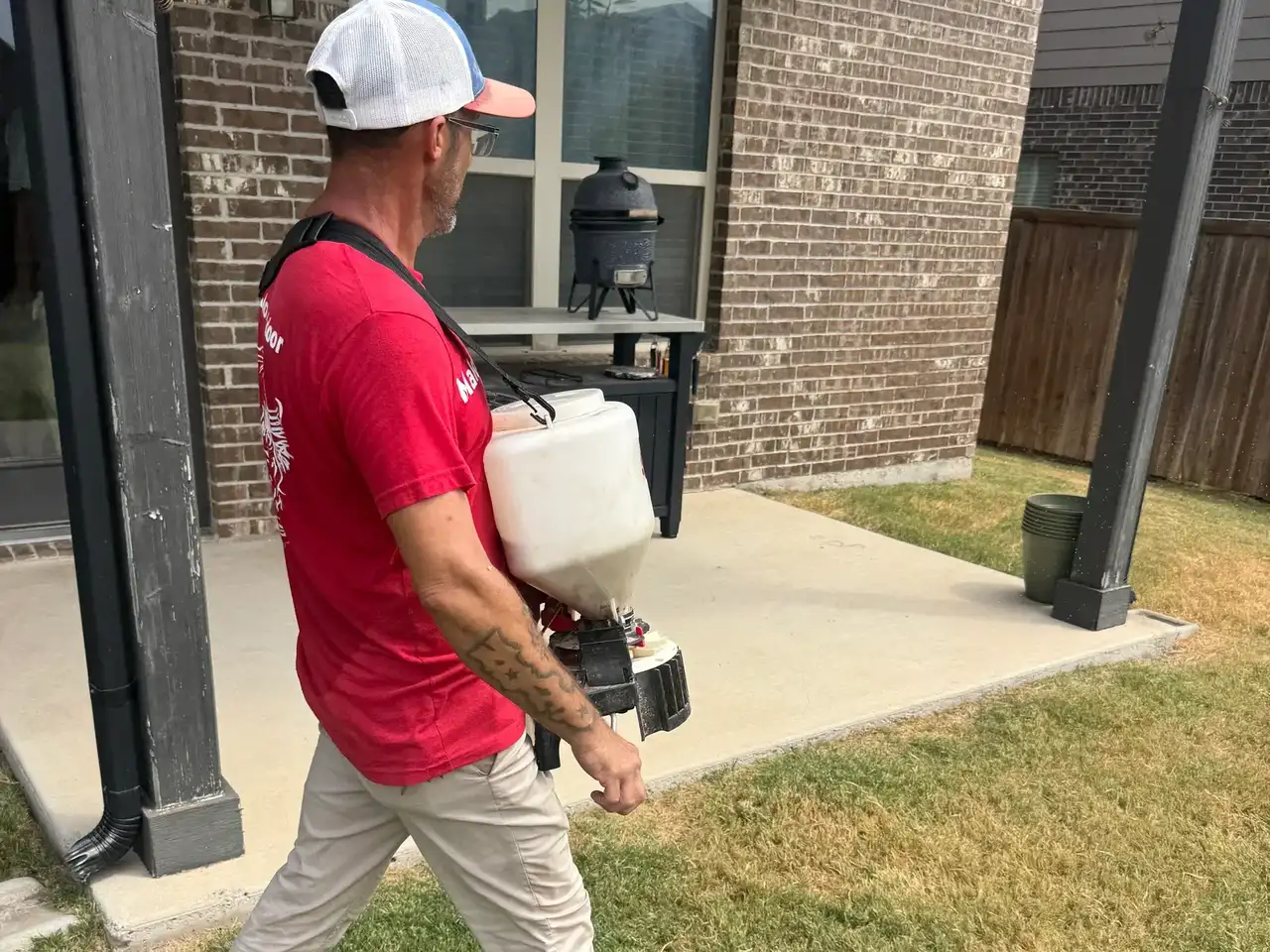
Sunny strips along the concrete
We check the St. Augustine beside the driveway and sidewalk first, since that is the one place on a canopy street where chinch bugs thrive. A can sunk into the soil and filled with water brings them up if they are there.
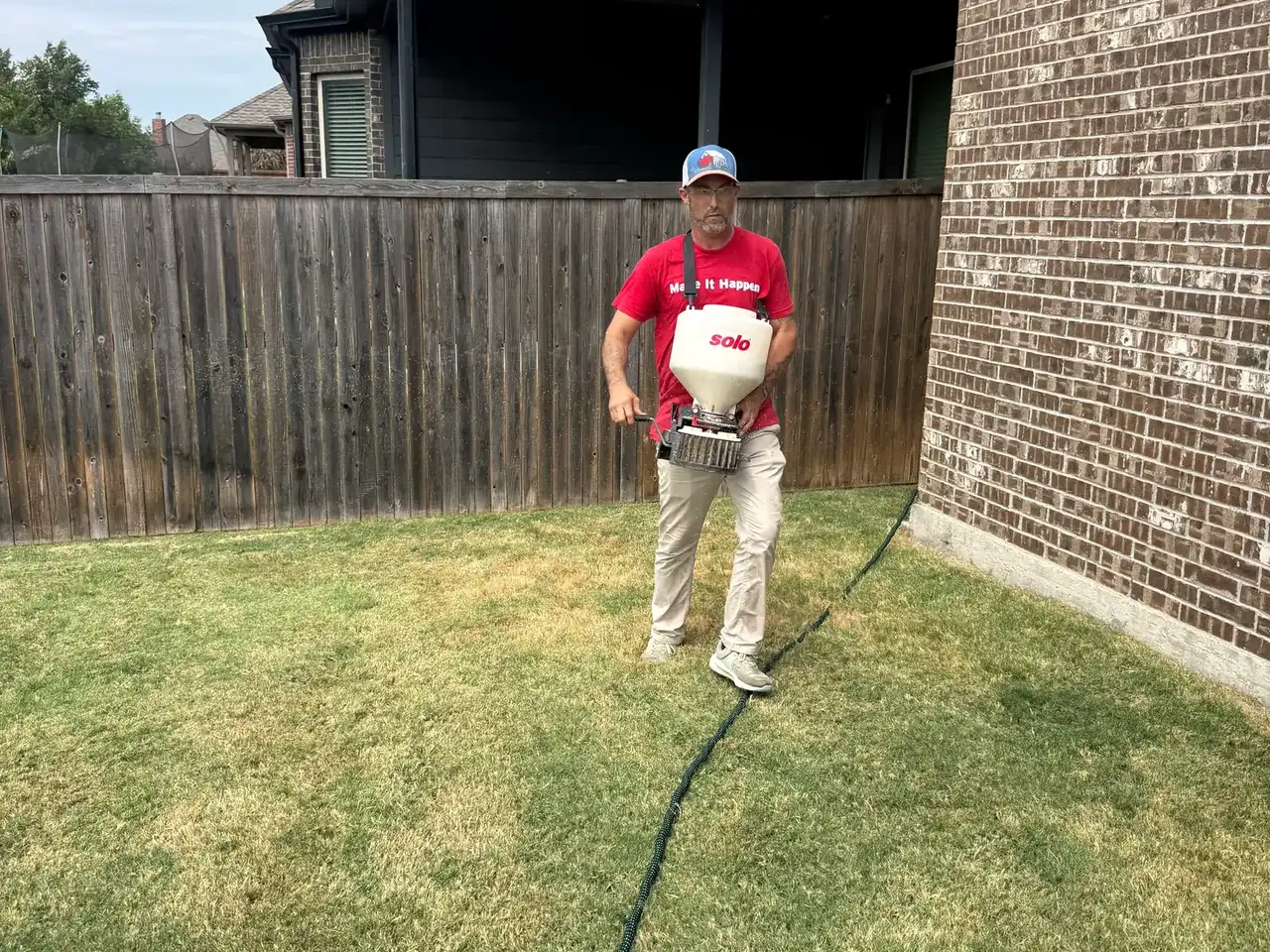
The shaded back lawn
Under the trees we are looking for grubs: spongy turf, patches that peel back with no roots, digging by birds or armadillos. We pull back a square foot and count what is underneath rather than guessing from the surface.
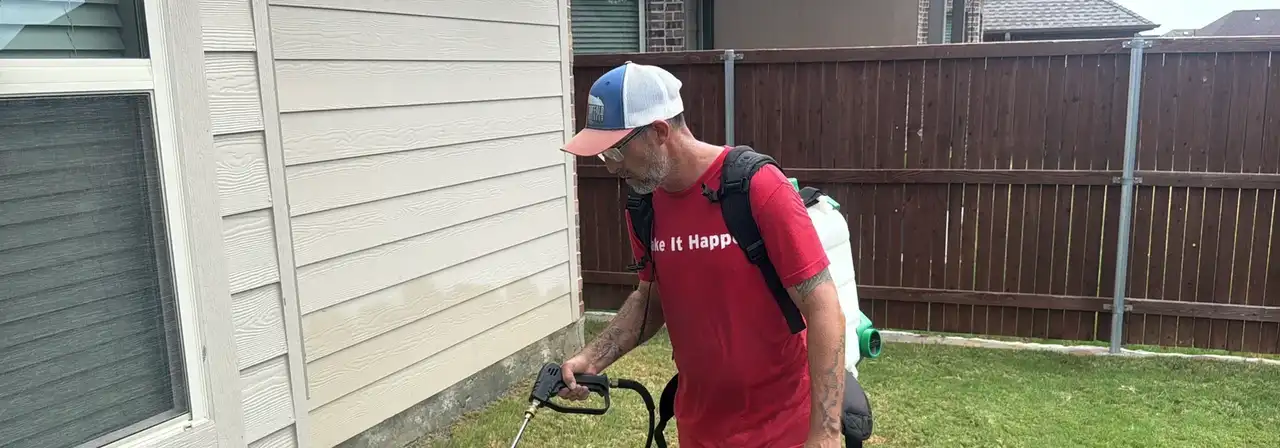
Ruling out the non-insects
A lot of brown in older North Richland Hills yards is shade, compaction or a fungal patch after a wet week. We say which it is and, when it is not a bug, we do not treat for one.