SMALL TOWN, OPEN LOTS
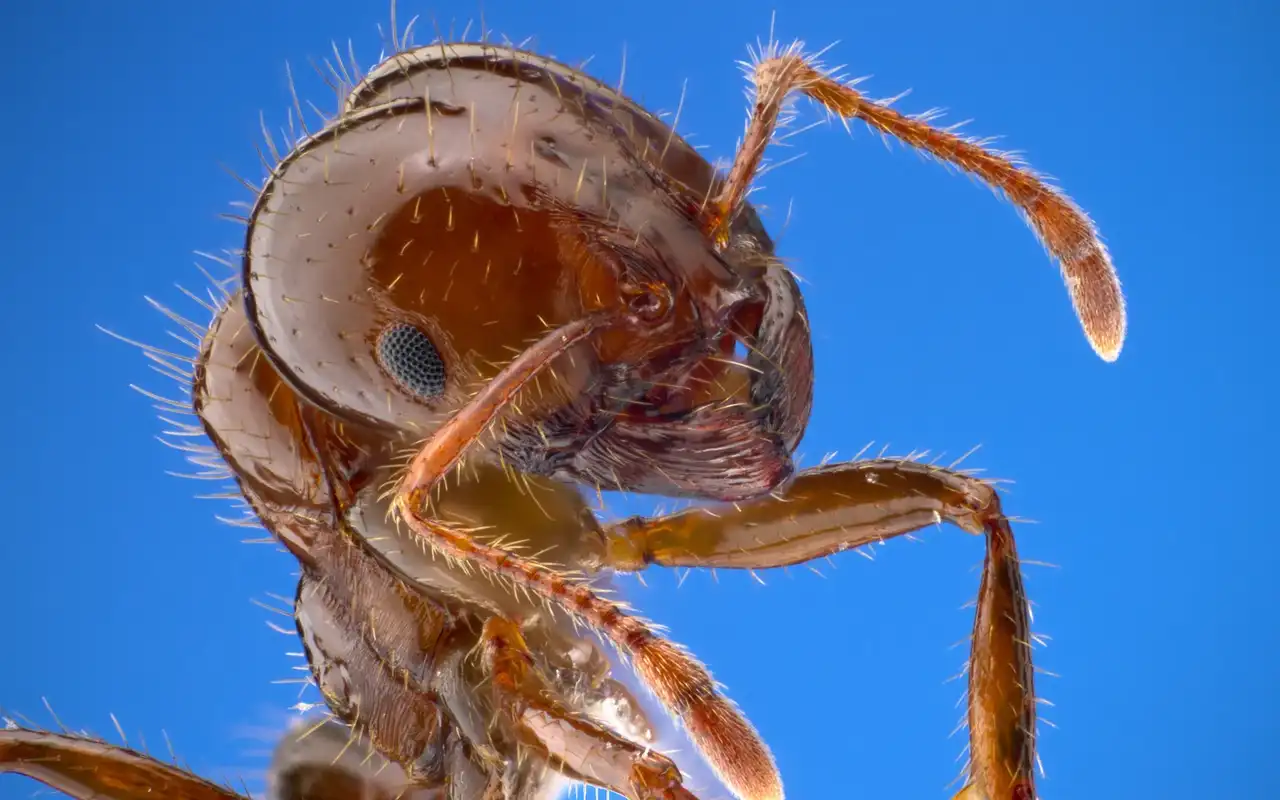
What makes Pelican Bay easy ground for fire ants
Sun and water together, which is the combination they are looking for. Pelican Bay sits on the west shore of Eagle Mountain Lake with compact lots and far less canopy than the older inland suburbs, so most of a yard here is open turf that warms early in the year. Add the moisture that comes with living on a lake and colonies stay active across a longer stretch of the calendar.
The mailing address confuses people more than the ants do. Every address in town goes out as Azle 76020, which has no bearing on what a fire ant does and none on what we charge. What matters on the ground is how much of the lot takes full sun and whether anything has been dug, filled or re-sodded lately.
PRICES, PLAINLY
What you actually pay in Pelican Bay
Fire ant treatment carries no price of its own, because it is bundled into both year-round programs. Those are priced from the square footage of the house, and housing in Pelican Bay runs small, so most of it falls in the first band: $30 a month on Home Defender under 1,500 square feet, or $33 to $38 a month between 1,500 and 3,000.
The whole-yard version, Complete Home & Lawn Defense, is $40 a month at the smallest size and $40 to $51.50 in the band above it. Neither carries a contract, there is no charge to start and none to stop, and anything that comes back between scheduled visits is re-treated without a second bill.
Most houses in town
$30/mo
Home Defender, the smallest band
1,500 to 3,000 sq ft
$33–$38/mo
The larger homes here
Whole-yard treatment
$40–$51.50/mo
Complete Home & Lawn Defense
Every number on this page comes from our published price list. Pelican Bay homes get the same table as everyone else; the instant quote reads your square footage and lot size and hands you your own line.
NOT A MAGIC BULLET
Where fire ant bait leaves you on your own
Your dock, your seawall and any rock edging sit outside what a spreader covers. Colonies nest in the warm gaps around hard edges and granules do not reach into them, so those spots have to be pointed out on the walk-through and handled directly rather than assumed away.
The wait is real and there is no negotiating it. Two to three weeks after the granules go down is when mounds stop being maintained, because the bait has to travel from a forager's mouth all the way to the queen. No product is both slow enough to work this way and fast enough to satisfy you by Saturday.
And bait will not stop the lake resupplying the shoreline. Rising water shifts colonies around the bay, so lots at the water's edge reinvade faster than the ones set back from it. That is the reason the treatment repeats on every scheduled visit instead of happening once.
DIY OR ON THE PLAN
Could you just buy a bag and do this yourself?
Honestly, yes, provided you do all three parts. Buy broadcast bait rather than a mound product, put it across the entire lawn instead of on the domes, and pick a day with about 24 dry hours after it. That is the whole method, it is not a trade secret, and the material on the shelf is the same category as ours.
What defeats most people is the pattern, not the product. They wait for mounds, treat only those, and do it right after rain while the ground is soaked, which is the one combination almost guaranteed to disappoint. If you already know you will not be watching the forecast in March, paying for it inside a plan is the cheaper mistake to make.
THE WALK-THROUGH
What we do on a first Pelican Bay call
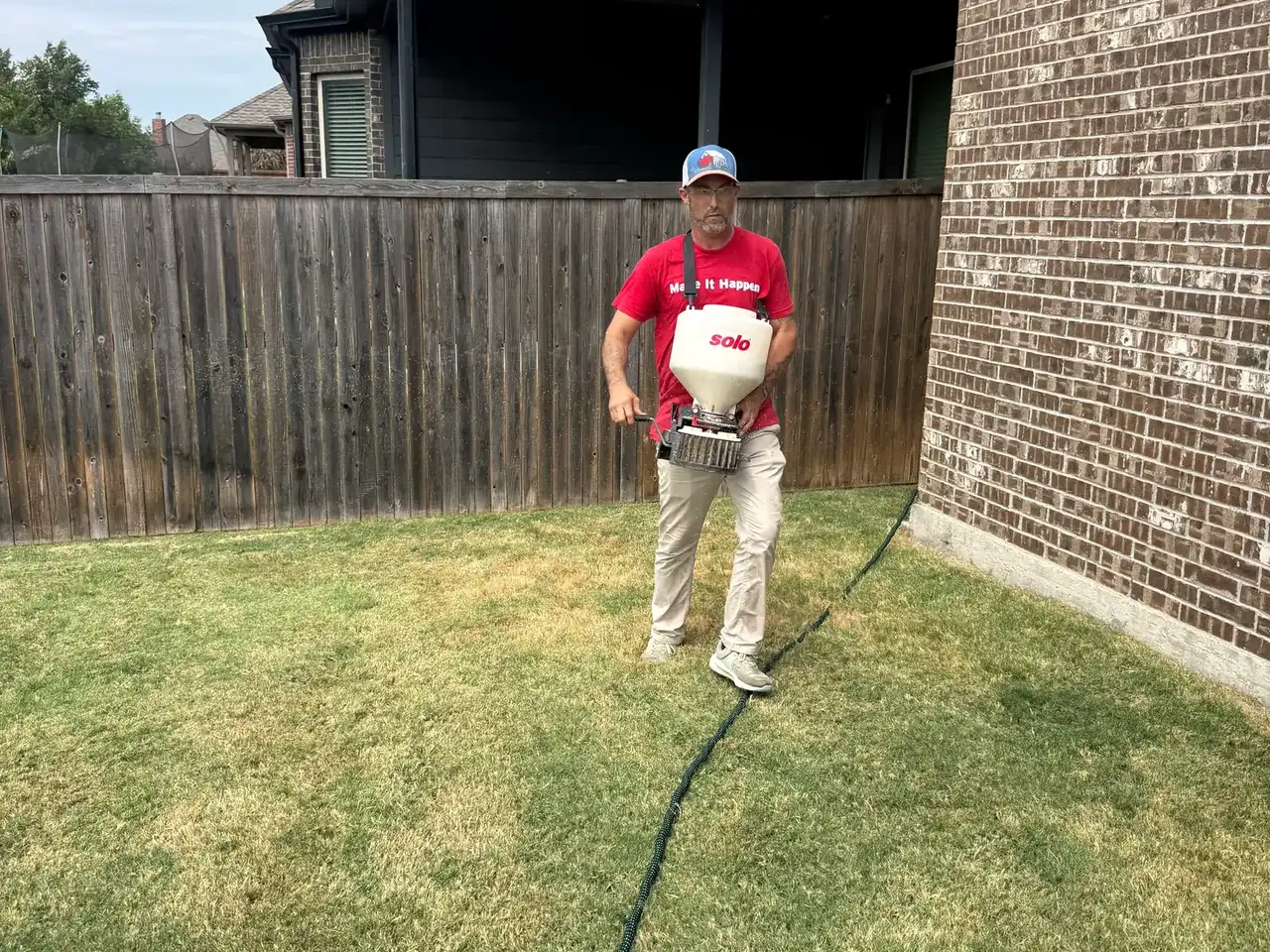
Sun, edges and disturbance
The walk starts with where the sun lands, where hard edges like the drive and the seawall hold heat, and whether anything on the lot has been dug up recently. Those three between them locate nearly every colony on a lot this size.
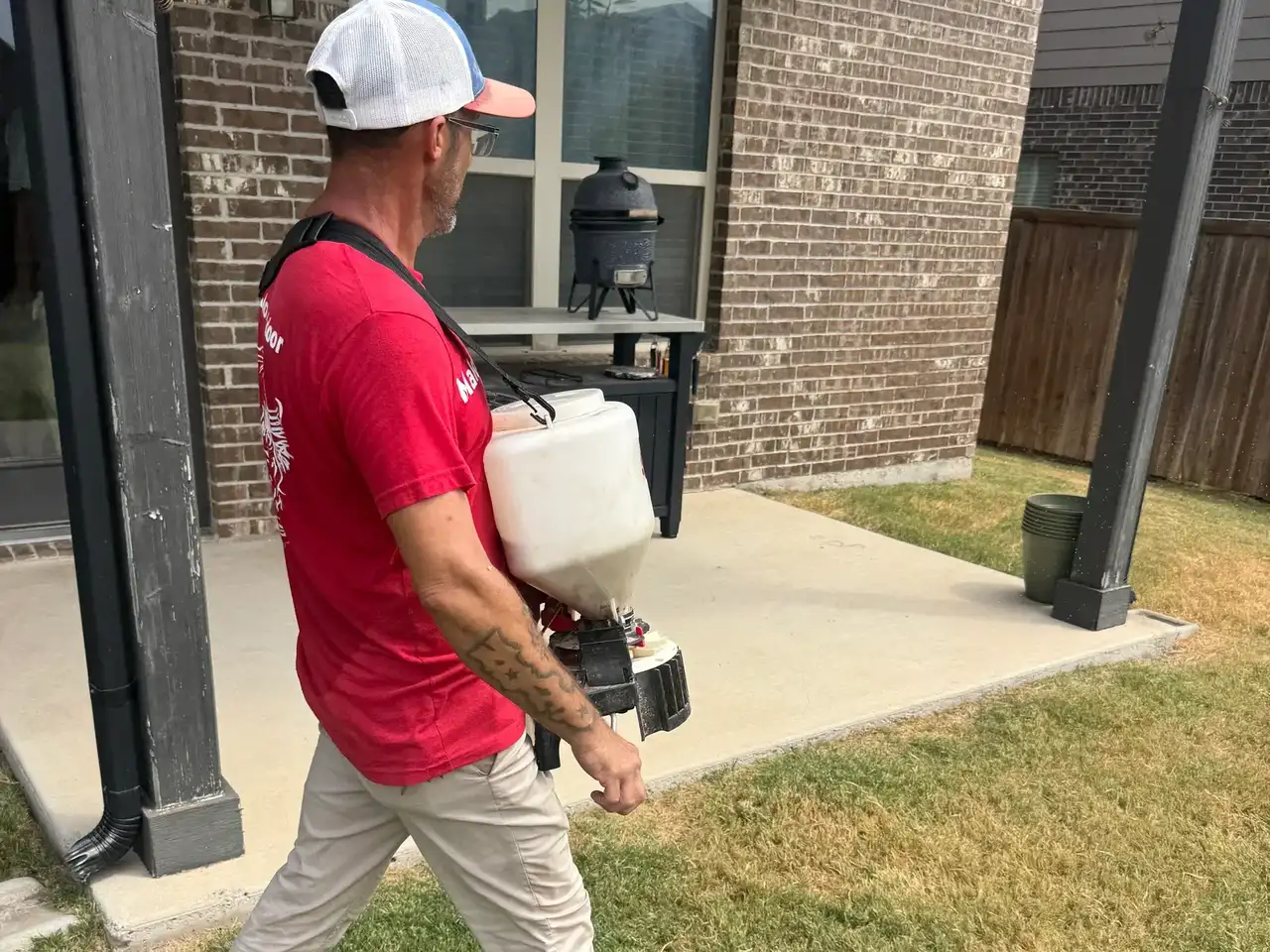
Bait the lawn end to end
Granules go over all of the mowed grass at a rate light enough that you will not spot them afterwards, because the nests you have not found are the ones that refill a yard. The appointment is scheduled around the forecast rather than around our convenience.
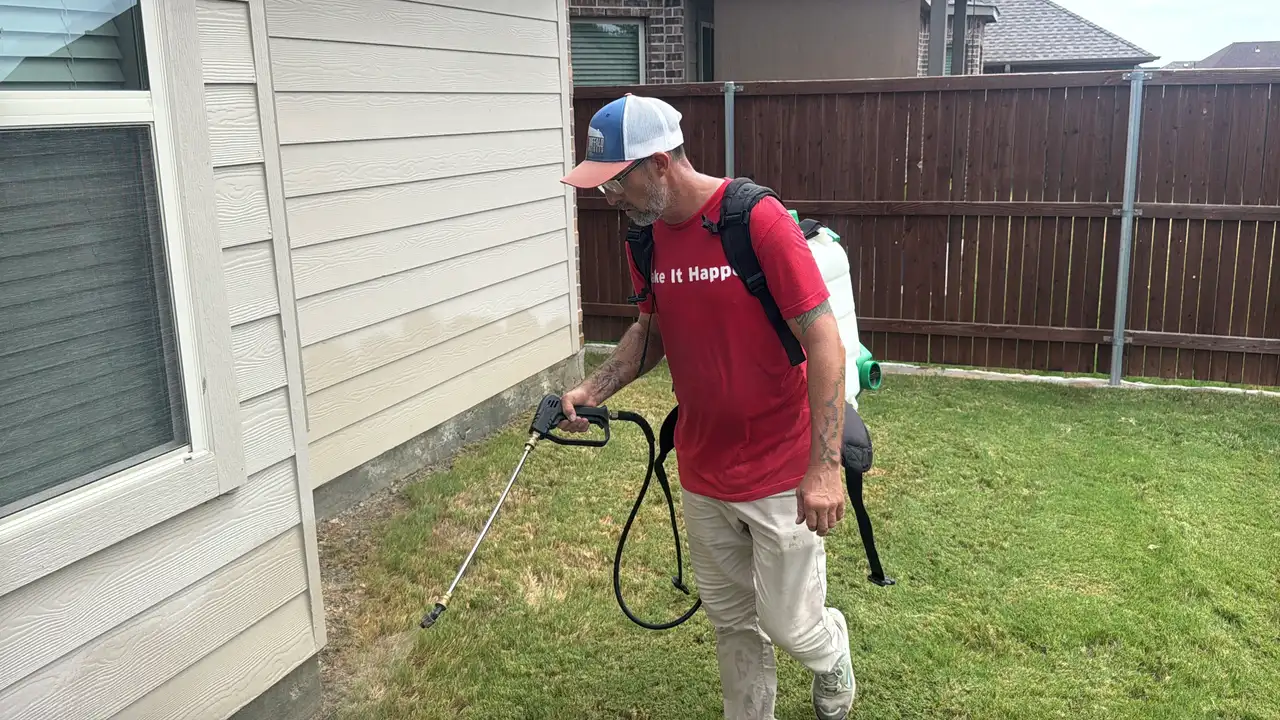
Then the structure and the sheds
The same visit covers the foundation, the eaves and the weep holes with Delta Dust, and takes in the shed, the woodpile and anything else dark and dry. Those shelter spiders and scorpions rather than fire ants, and they belong to the same plan.