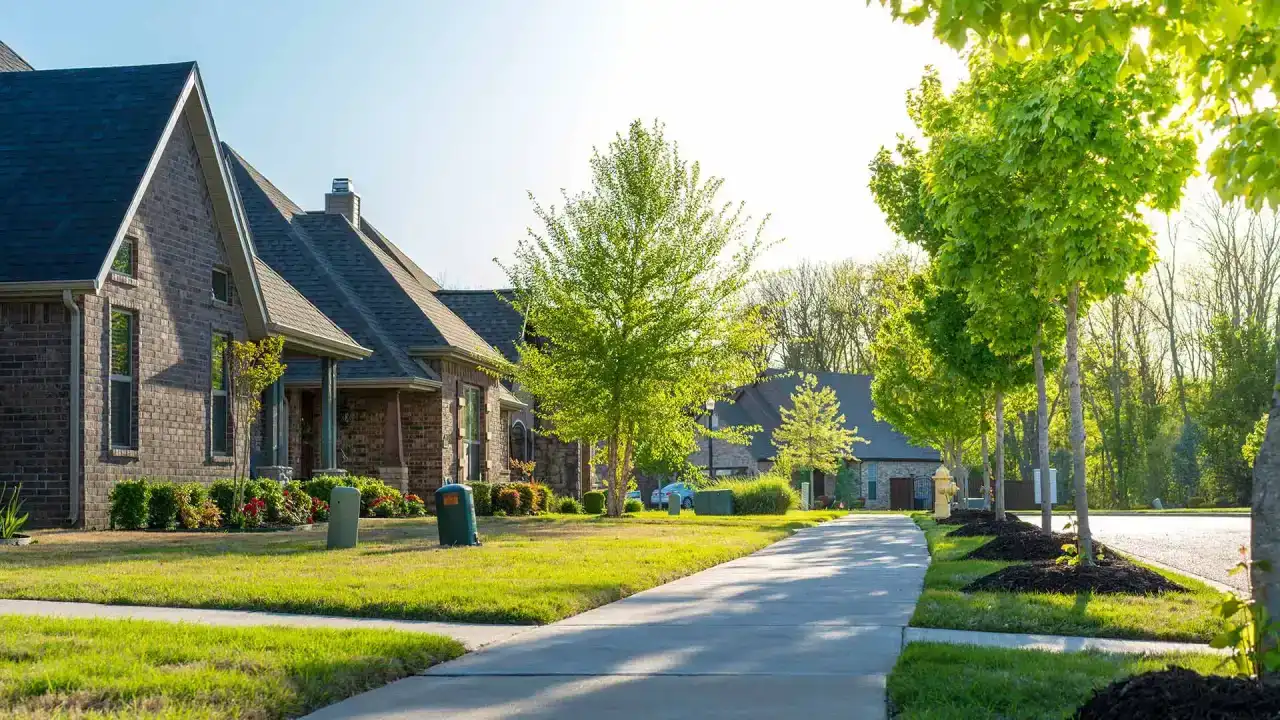
WEST SHORE, SMALL LOTS
Where a Pelican Bay rodent problem actually starts
Outside, in something you own but do not think about. Pelican Bay sits right on the west shore of Eagle Mountain Lake, and lake living comes with sheds, docks, stacked firewood and stored gear. All of it is dry, dark and undisturbed, which is the whole of what a rat is looking for, and none of it is built to keep anything out.
The shoreline supplies the rest. Vegetation at the water's edge stays damp and uncut, giving cover for animals moving between properties, so a small town of small lots ends up with a shared population rather than a set of separate problems.
The house is the last step, not the first. By the time something is heard in a wall it has generally been on the property for weeks, which is why the inspection starts at the outbuildings and works inward rather than beginning at the back door.
WHAT PELICAN BAY PAYS
The add-on is $25; the plan beneath it is usually the smallest one
Rodent control is $25 a month added to a year-round plan, and it is not sold on its own at any address. What changes from house to house is the plan carrying it, and that is priced on the square footage of the home.
Pelican Bay houses are mostly modest, which puts a lot of them in the cheapest band: under 1,500 square feet, Home Defender is $30 a month, so the whole arrangement is $55. Between 1,500 and 3,000 square feet it is $33 to $38, so $58 to $63. If you want the yard covered as well, Complete Home & Lawn Defense starts at $40 with the same $25 rodent line. You hear the number before you agree to anything, and there is no startup fee on either plan.
Rodent add-on
$25 a month
Requires Home Defender or the whole-yard plan
Home Defender, up to 1,500 sq ft
$30 a month
Where most of the town lands
Home Defender, 1,500 to 3,000 sq ft
$33–$38 a month
The larger and extended houses
Complete Home & Lawn Defense, up to 1,500 sq ft
$40 a month
Yard included, rodent line unchanged
Every number on this page comes from our published price list. Pelican Bay homes get the same table as everyone else; the instant quote reads your square footage and lot size and hands you your own line.
THE UNCOMFORTABLE PART
What we cannot do about rodents in Pelican Bay
We cannot seal a dock, and we would not take money to try. Open structures over water are not excludable, so what happens there is trapping and sensible storage, and the real defence is the house and the sheds that do have walls to work with.
We cannot control a small town's shared cover. On lots this size, one neighbour's woodpile against a fence or an unmowed strip at the water is within easy reach of several houses at once. Sealing yours is still worth doing; it just means the yard stays a thoroughfare while the building stops being a destination.
And we cannot make it instant. Exclusion is same-day, but trapping out the animals already inside takes a fortnight or so, and the follow-up visit is there to prove the work held rather than to pad the job.
NOW OR WHEN IT TURNS COLD
Waiting for winter against sealing in the warm months
Most people call when the first cold snap pushes rodents indoors, and that is a fine time to call — but it is the hardest time to do the work. The animals are already inside, the population is at its annual peak, and trapping has to run alongside the sealing rather than after it.
Doing it in the warm months is the same money for a cleaner job. The openings are just as findable in June as in December, there is far less inside the walls to trap out, and by the time the weather turns, the house is closed. If you are reading this in January, call anyway; we are simply saying the calendar favours the other half of the year.
STARTING OUTSIDE
The order of a first visit in Pelican Bay
The shed, the woodpile and the dock side
Everything detached gets opened and inspected before we look at the house: droppings on a shelf, nesting in stored cushions, gnawing on a fuel line. That is where the population usually is, and trapping it there is what quietens the house fastest.

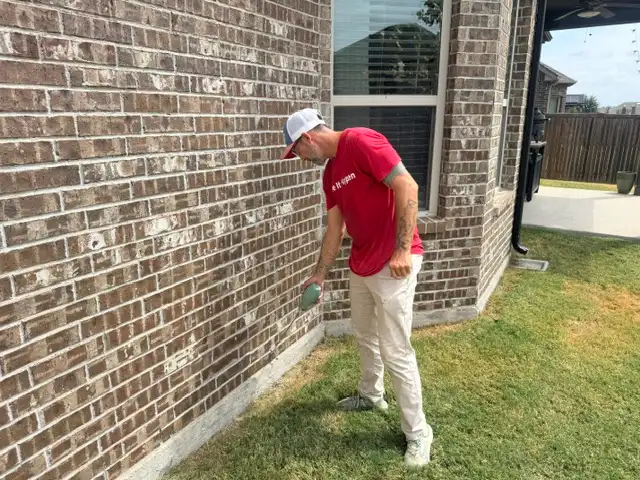
The water-facing wall
The side facing the lake gets the closest look, because that is the approach. We check the bottom course, the hose bib and utility penetrations, crawl vents and any gap where a deck or dock structure meets the wall, and we seal what shows sign.
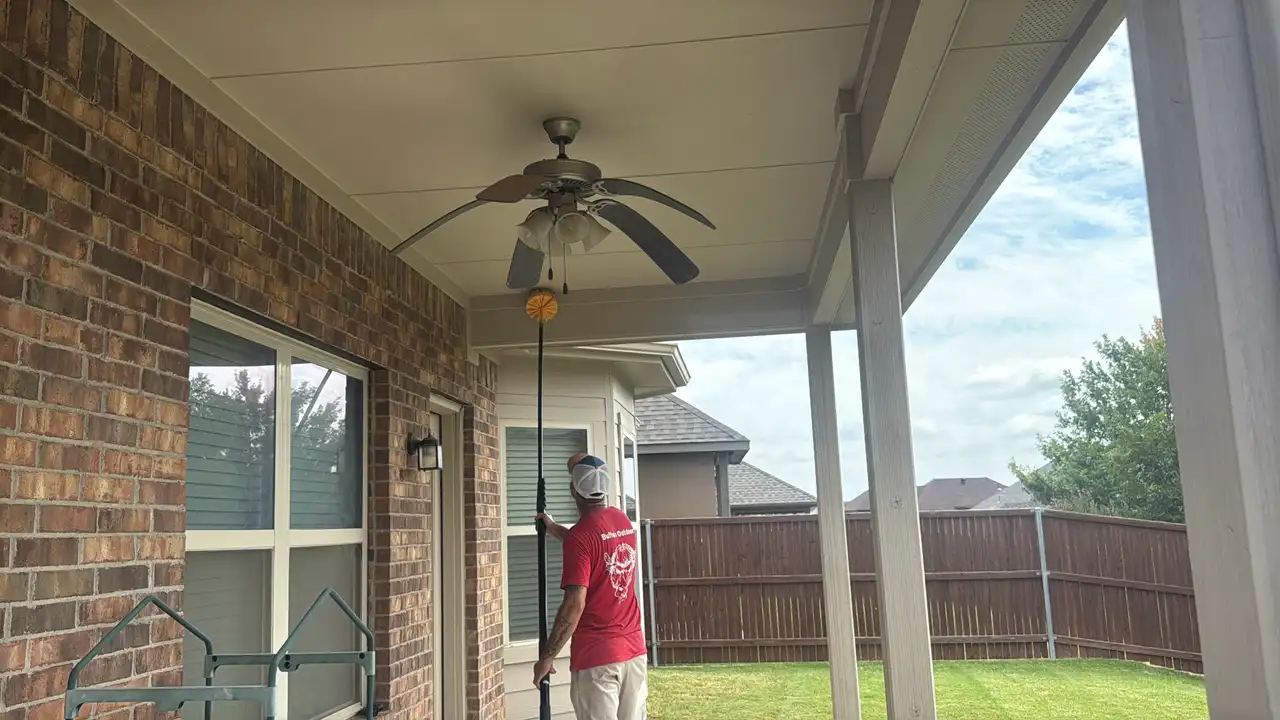
Doors, attic and station placement
Thresholds and the garage-door corners are the common ground-level entries on a small house, and the attic tells us the rest. Weep holes are already packed with copper mesh and dusted under both plans, so traps and locked stations go on the runways we find and a return date is set on the spot.