SMALL LOTS, OPEN SUN
What eats grass in Pelican Bay
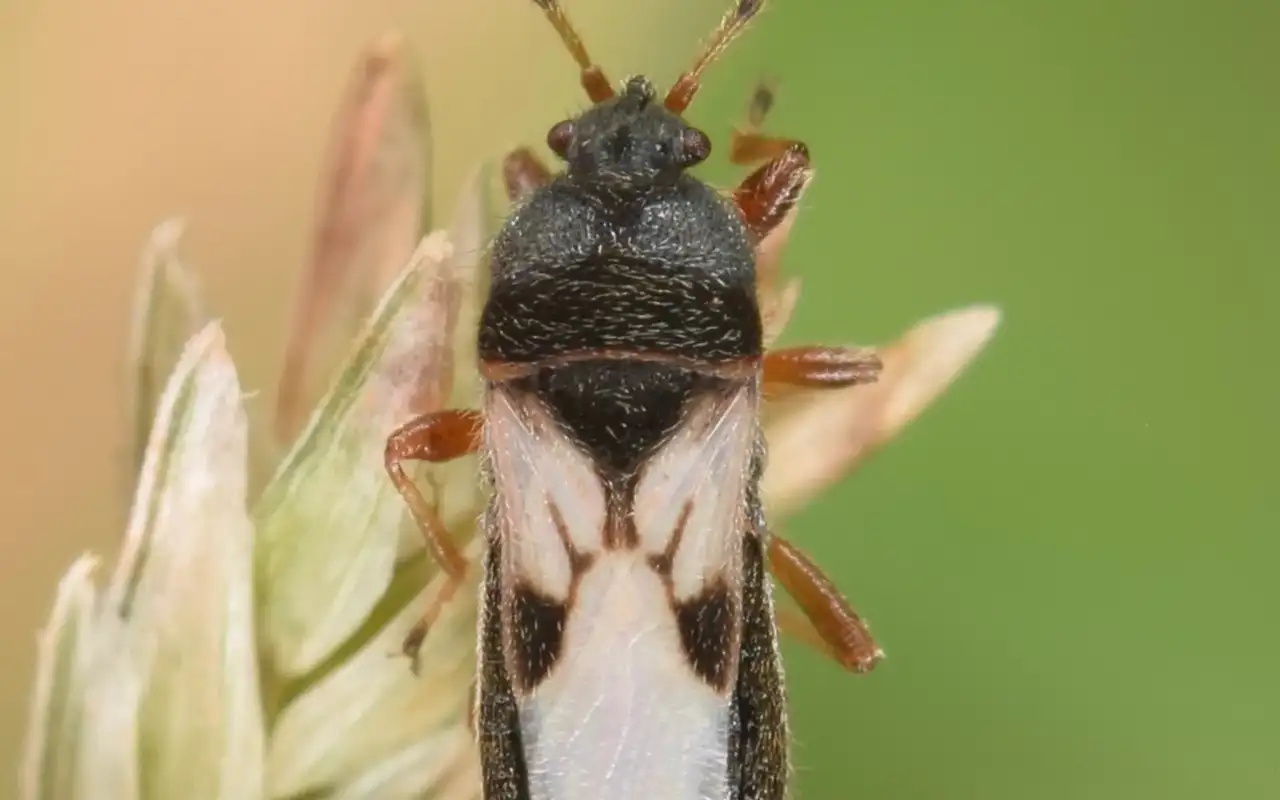
Yards here are small and mostly open to the sun, and that combination is chinch bug weather. Anywhere St. Augustine was laid and sits in full light beside a hot concrete edge, the insect has what it wants: shallow thatch, heat and no shade. Grubs and armyworms turn up as well, but those sun-baked strips are where the calls start.
The lake shapes the rest. Water tables near the shore keep some Pelican Bay yards damp enough to encourage beetle egg-laying, so grubs concentrate in the softest, best-watered parts of a lawn instead of spreading evenly across it. Unmowed ground around the edges of town gives armyworms somewhere to build up before they cross into a yard.
SMALL HOUSE, LOW BAND
Turf coverage on a Pelican Bay budget
Most houses in town are small, and since both year-round plans are priced on the square footage of the house, most of Pelican Bay reads from the bottom rows. Home Defender starts at $30 a month with the applicable lawn treatment out to about 25 feet. Complete Home & Lawn Defense starts at $40 a month and covers every part of the yard.
On a compact lot that ring reaches further than people expect, and it is worth pacing before you pay for the upgrade. Nothing here carries a startup fee or a contract, retreatment between scheduled visits is included, and the figure arrives before you commit to anything.
Smallest houses, whole yard
$40/mo
Complete Home & Lawn Defense floor
Smallest houses, ring only
$30/mo
Home Defender, about 25 feet out
1,500 to 3,000 sq ft
$40–$51.50/mo
The upper end of most Pelican Bay streets
Every number on this page comes from our published price list. Pelican Bay homes get the same table as everyone else; the instant quote reads your square footage and lot size and hands you your own line.
STRAIGHT TALK
Reasons to skip this one
If your yard is mostly Bermuda in full sun and it browns evenly every August, that is heat rather than insects. Insect damage is patchy and has an edge to it, while heat stress takes the whole lawn at once. Buying a treatment for a lawn-wide brown-off is money poured into the ground.
If you rent, this is not your purchase either. The plans are year-round and attached to the property rather than to a season, so a tenant paying for turf insect coverage is buying an improvement for somebody else. Point the landlord at it instead.
And no turf treatment stops mosquitoes, chiggers or ticks, which is what most Pelican Bay complaints are really about. Those live in a different program, priced on lot size at $49.95 to $129.95 a visit every 21 days from April through September. We would rather you bought the right one.
ONE PLAN OR THE OTHER
Home Defender or the whole yard here?
On a small lot the honest answer is often the cheaper plan. Home Defender's lawn treatment reaches roughly 25 feet from the house in every direction, and on a modest Pelican Bay lot that can take in most of the mowed grass, front and back. Measure it before you spend the extra $10 a month.
Complete Home & Lawn Defense earns its place when the grass runs well past that ring, when a side yard or a long back strip keeps getting hit, or when fire ants refill the yard from parts of the property the band never touches. It broadcasts across the whole lawn, and on a wide lot that is the difference that counts.
FIRST TIME ROUND
How a Pelican Bay lawn gets read
The hot strips
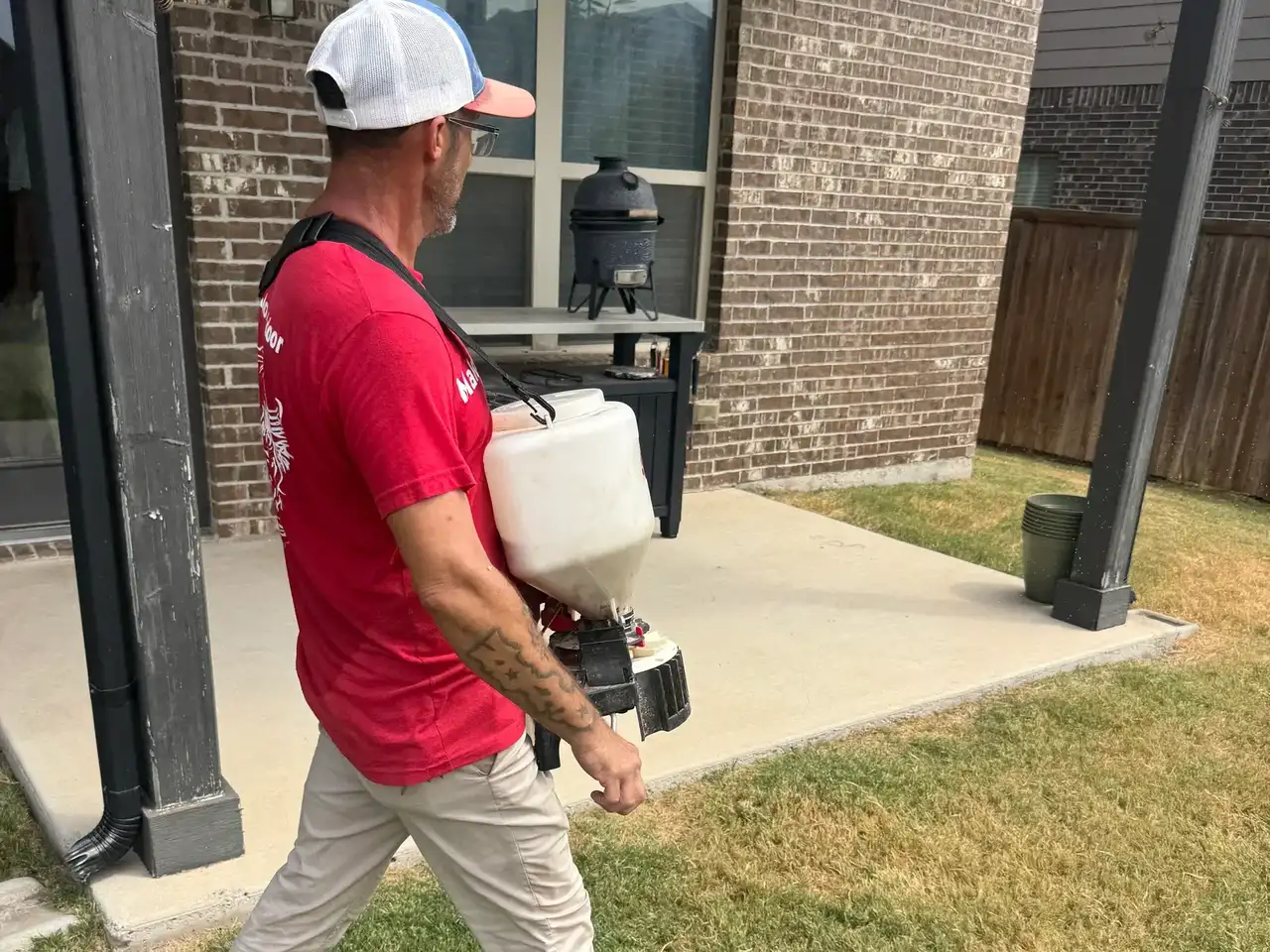
The driveway edge, the sidewalk margin and any turf against a south wall are the first places we stop. Chinch bug kill zones begin in exactly those spots because the soil is warmest and driest there, and damage starting anywhere else usually is not them.
A can of water
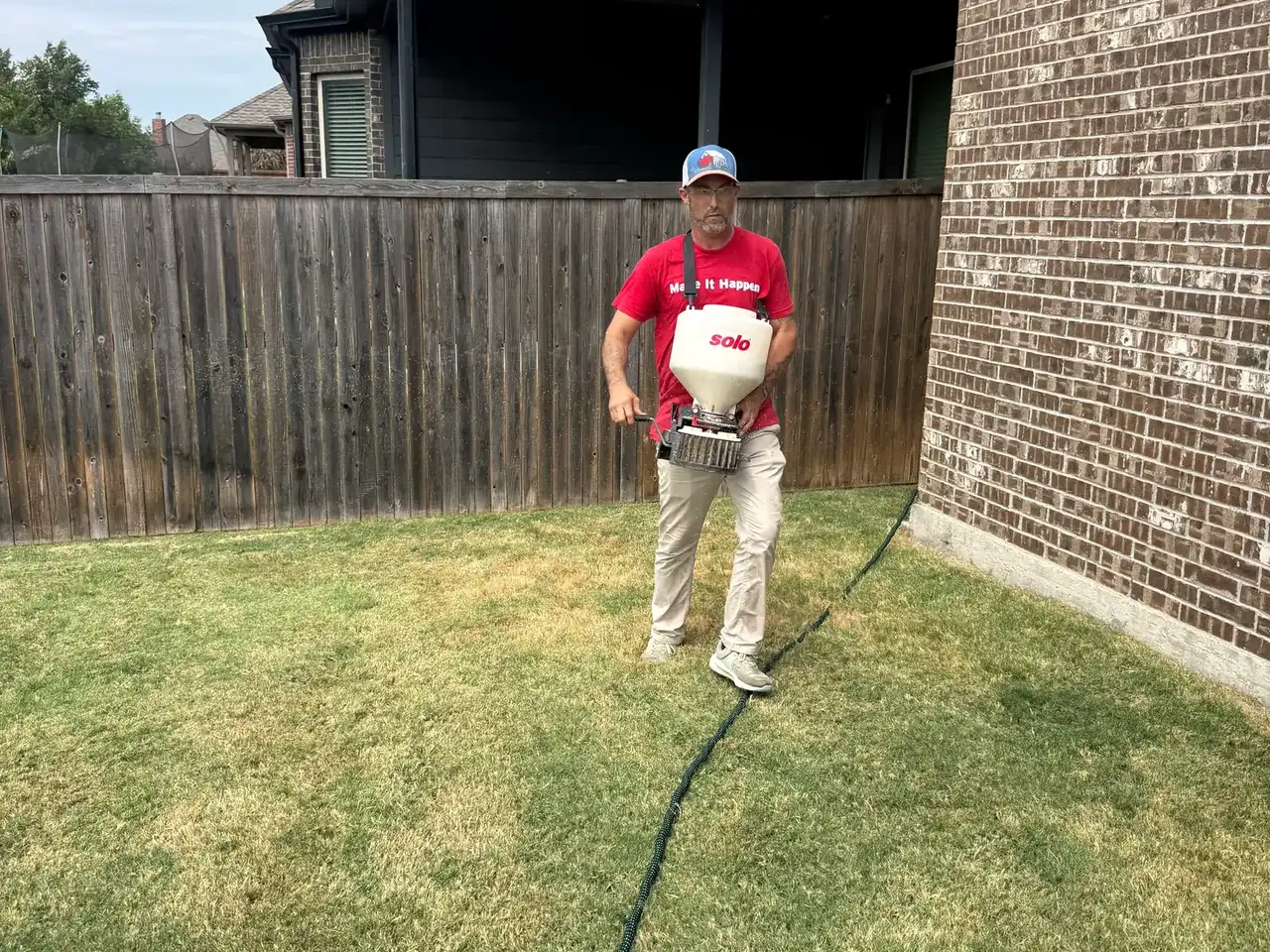
The field test takes ten minutes: a coffee can with both ends cut out, pushed two inches into the soil where green meets brown, topped up with water. Chinch bugs float. If nothing surfaces, we stop talking about chinch bugs and start looking under the turf instead.
Sheds, docks and the perimeter
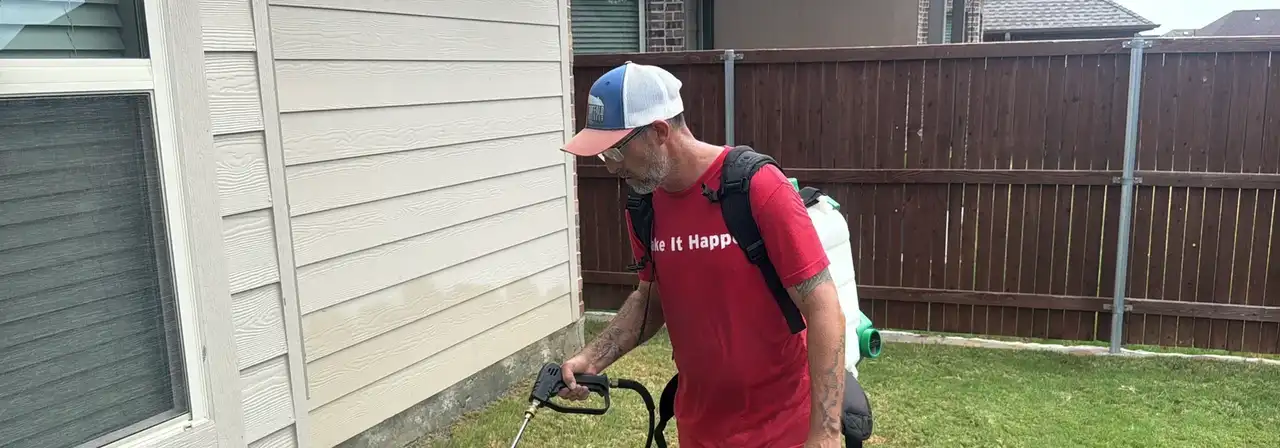
The lawn treatment arrives attached to a year-round plan, so the same visit covers the foundation band, the eaves, Delta Dust in the weep holes and fire ant bait. Around here the outbuildings and woodpiles get a look too, because that is where spiders and scorpions sit out the day.