UNDER THE CANOPY
Where fire ants hide on a Westover Hills property
In the sunlight. Westover Hills sits under some of the heaviest tree canopy in Tarrant County, and mature oaks and pecans keep the ground beneath them cooler and damper than a fire ant colony will tolerate for long, so the shaded acre behind the house is mostly safe. The mounds show up where the sun reaches: the open stretch of lawn out front, the gap between stone walls where a bed was reworked, the turf around a pool deck.
Estate landscaping creates its own openings. Every time a bed is dug out and replanted, or a wall footing is trenched, or irrigation lines go in, that soil is disturbed and the ants that held it are gone. On a large, layered Westover Hills landscape that happens somewhere on the property most years, which is why we bait all of the turf rather than hunting mounds.
THE PRICE ON AN ESTATE LOT
What fire ant treatment costs in Westover Hills
There is no fire ant line item; the bait is part of both year-round plans, and the plans are priced on the square footage of the house, not the acreage around it. Westover Hills homes run large, so most fall in the upper two bands: $38 to $46 a month on Home Defender for 3,000 to 4,500 square feet, and $46 to $54 for 4,500 to 6,000.
Above 6,000 square feet we quote the house individually rather than guess, and you will have that number before we schedule anything. Complete Home & Lawn Defense, which treats the entire yard for lawn insects and chiggers as well, runs $51.50 to $62 and $62 to $73.50 in those same bands. Whichever plan you choose, the bait goes across the whole lawn, and it is month to month with no fee at either end.
3,000 to 4,500 sq ft
$38–$46/mo
Home Defender, bait across the full lawn
4,500 to 6,000 sq ft
$46–$54/mo
Whole-yard plan: $62–$73.50 a month
Over 6,000 sq ft
Quoted
Common in Westover Hills; you get the number first
Every number on this page comes from our published price list. Westover Hills homes get the same table as everyone else; the instant quote reads your square footage and lot size and hands you your own line.
WHERE IT DISAPPOINTS
What bait cannot do on a big Westover Hills lot
It cannot beat the calendar. Two to three weeks pass between the day we spread and the day the colonies collapse, because the queen has to be fed the bait by her own workers. On a property where guests use the lawn, that means planning the first application well ahead of the event rather than the week of.
It cannot be spread onto wet ground or ahead of a storm. Bait that gets rained on goes stale before the foragers reach it, so a wet spring can shift a Westover Hills visit by a day or two while we wait for a dry window of roughly 24 hours.
And it does not treat beds, gravel or hardscape. Fire ants will nest under stone edging and in mulch where a spreader cannot reach, so on a heavily landscaped lot we also look at those edges on each visit and deal with what the broadcast pass cannot touch. If a mound comes up in a bed between scheduled visits, that return trip costs nothing.
YOUR CREW OR OURS
Should the landscaper handle fire ants in Westover Hills?
Ask what they are actually doing. Many maintenance crews spot-treat mounds with a drench or a contact granule when they see them, which flattens the visible mound and very often relocates the queen a few feet over. That looks like service and produces more mounds a fortnight later.
If your crew is willing to broadcast a bait across every square foot of turf in early spring and again in fall, in a dry window, they can do the job. Most are not set up for that, and it is worth asking. Either way, on a year-round plan the bait is already included, so having us do it does not add to what you pay for the perimeter work on a house this size.
FIRST VISIT, LARGE LOT
The first fire ant visit on a Westover Hills property
Map sun and disturbed soil
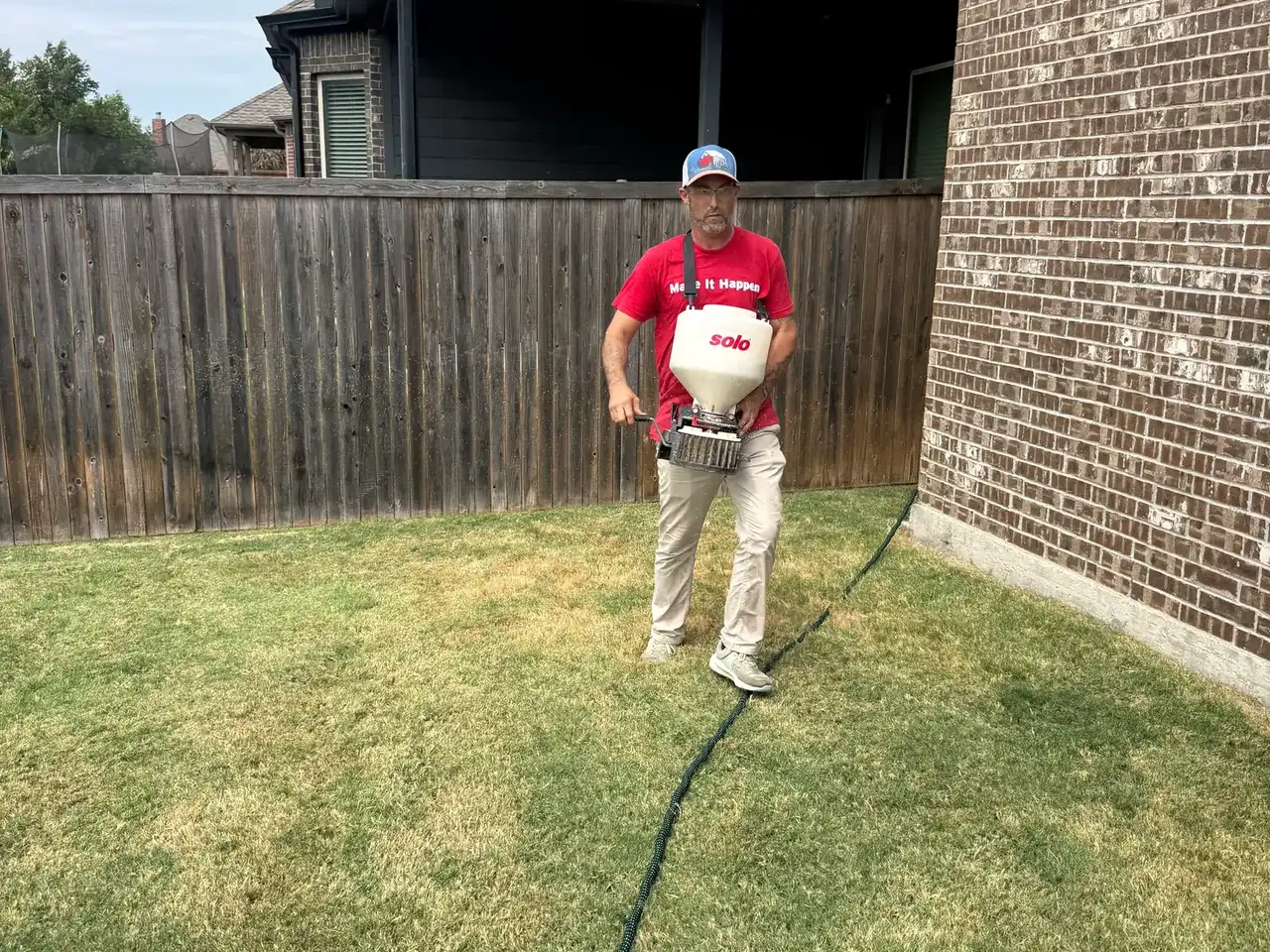
We walk the whole lot and mark the open, sunny turf and any ground that has been dug in the past year or two, since those are the only places colonies will settle under this much canopy. Active mounds get flagged, including the ones behind the walls.
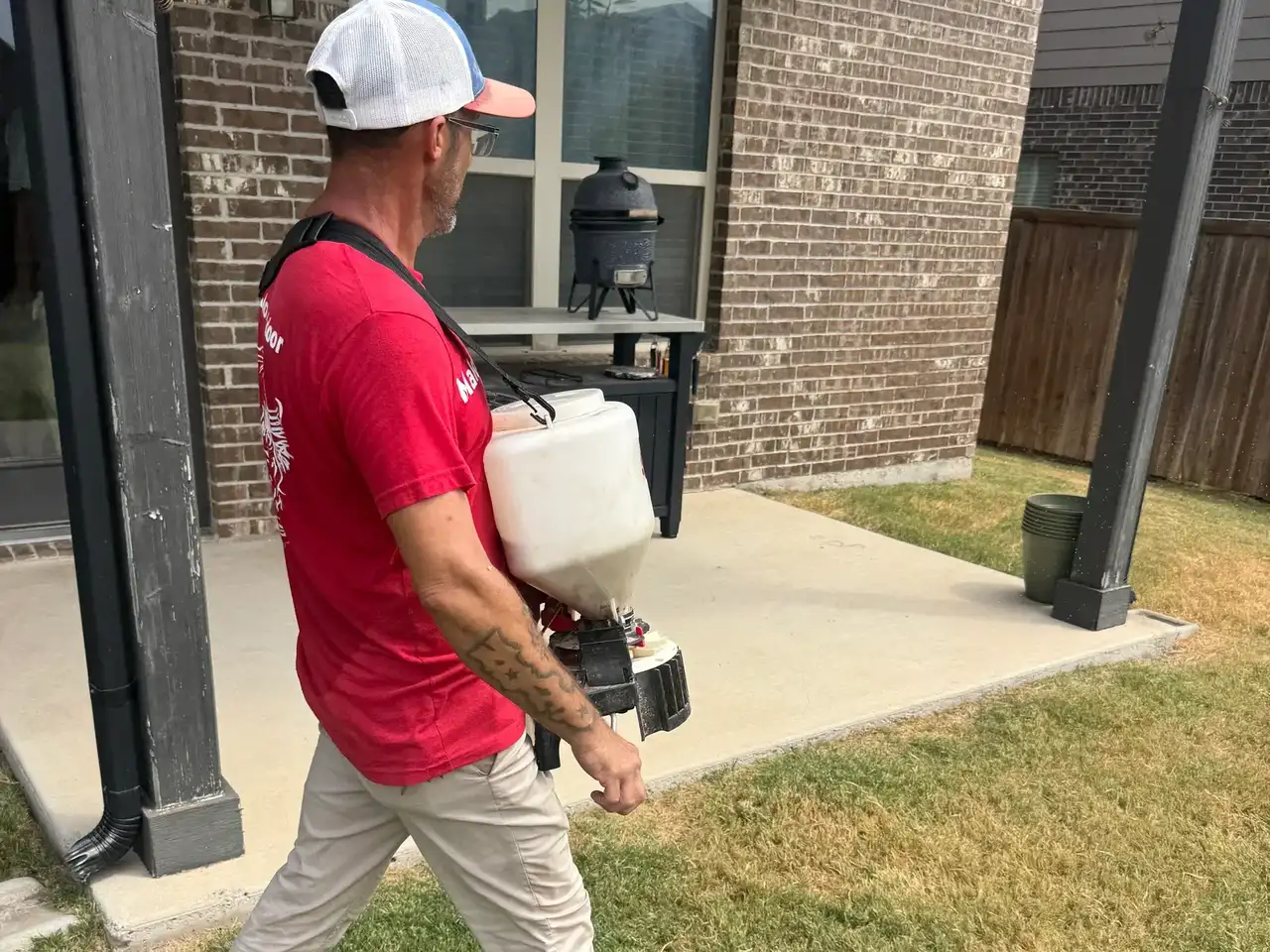
Broadcast every bit of turf
The bait goes down at a very light rate with a spreader over all of the lawn, front and back, whether or not a mound is visible there. Turf is not affected and the granules are gone into the colonies within a day.
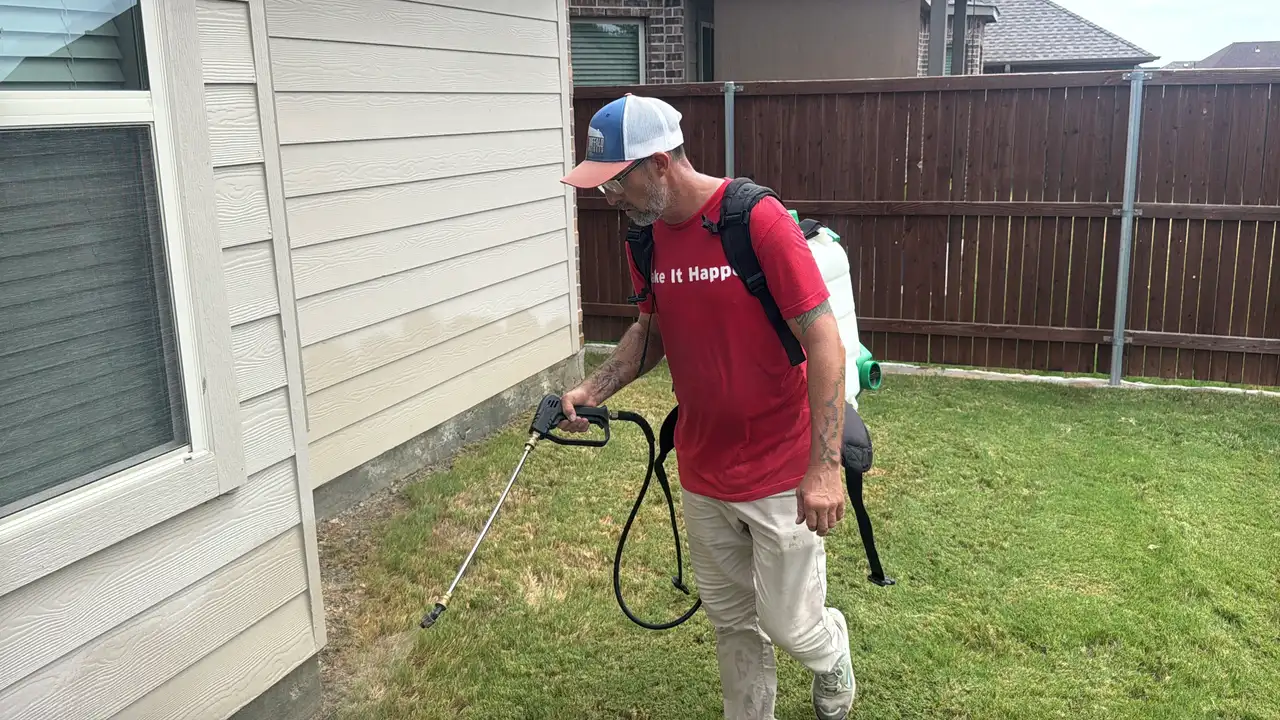
Check the perimeter while we are there
The same visit treats the foundation and eaves out to 25 feet and dusts the weep holes in the brick. On a large, irrigated Westover Hills landscape with beds tight against the house, that band is where most of the pest work actually is.