
IRRIGATED, SHADED GROUND
Estate landscaping makes better flea habitat than a plain lawn
The features that make a Westover Hills property beautiful are, unfortunately, what a flea larva is shopping for. Layered beds hold mulch that stays wet, an irrigation system tops the moisture up on a timer, and some of the heaviest tree canopy in the county keeps the sun from ever drying that surface out.
Scale compounds it. On an estate lot there is simply more of the habitat, and a good deal of it sits far enough from the house that nobody walks it, so a population can build for weeks before anyone indoors notices a bite.
Ticks arrive with the canopy. Wildlife moving through mature, connected tree cover drops them, and they wait in the taller grass and ground cover at the property edges. Both pests are handled on the same 21-day visit from April into September.
LARGE-LOT PRICING
Big lots sit at the top of the table, and some get quoted
This is the town where the upper bands are normal rather than exceptional. A large lot in Westover Hills lands around $99.95 or $109.95 a visit, the biggest measured parcels reach $129.95, and anything over about an acre we measure and quote instead of forcing it into a band.
Lot square footage is the only input. The size of the house, the value of the landscaping and the number of beds do not move the figure, and you will have that figure before committing to a season. Nothing is signed and nothing is charged to start.
17,001 to 22,000 sq ft
$79.95 a visit
The smaller parcels in town
27,001 to 32,000 sq ft
$99.95 a visit
A common size on these streets
42,001 to 47,000 sq ft
$129.95 a visit
Just under an acre of treated ground
Over 47,000 sq ft
Quoted
Measured first, then priced
Every number on this page comes from our published price list. Westover Hills homes get the same table as everyone else; the instant quote reads your square footage and lot size and hands you your own line.
LIMITS WORTH KNOWING
What treating the whole grounds still cannot solve
It cannot beat an irrigation schedule. A system running long and often keeps mulch and shaded soil permanently wet, which shortens how long any application stays useful and rebuilds the habitat behind us. Watering deeply and less often does more for your flea pressure than an extra visit would.
It cannot settle an indoor population either. Fleas breeding in rugs, bedding and the gap under furniture are independent of the grounds, so the answer there is hot laundry, careful vacuuming and your veterinarian's preventive. One interior treatment is included if you need it.
And some Westover Hills households should not buy this. With no pet, no wildlife traffic you have noticed and nobody finding ticks, a full season of visits on a large lot is a lot of money spent against nothing. Ask us to look before you sign up for it.
TREAT ALL OR TREAT THE EDGE
Whole property, or only the part you use?
On a large lot there is a genuine choice, and the cheaper answer is sometimes the right one. If the dog stays near the house and nobody walks the far corners, treating the used envelope plus a buffer at the boundary covers most of your real exposure for less than blanketing the parcel.
The case for doing it all is that fleas and ticks ignore the line you drew. Untreated shaded ground keeps producing, and pets and wildlife carry the results back toward the house within days. We will walk it with you and say which version your property justifies rather than defaulting to the bigger number.
FIRST VISIT, ESTATE LOT
How we work a large layered property the first time
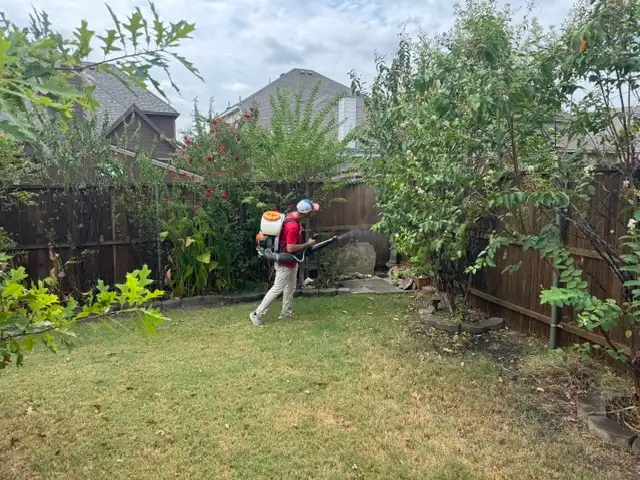
Mapping the wet ground
Before treating we find where irrigation and shade overlap, since that is where larvae will be: bed edges, the north side of walls, ground cover under the heaviest canopy. On a big property this walk takes a while, and it decides everything that follows.
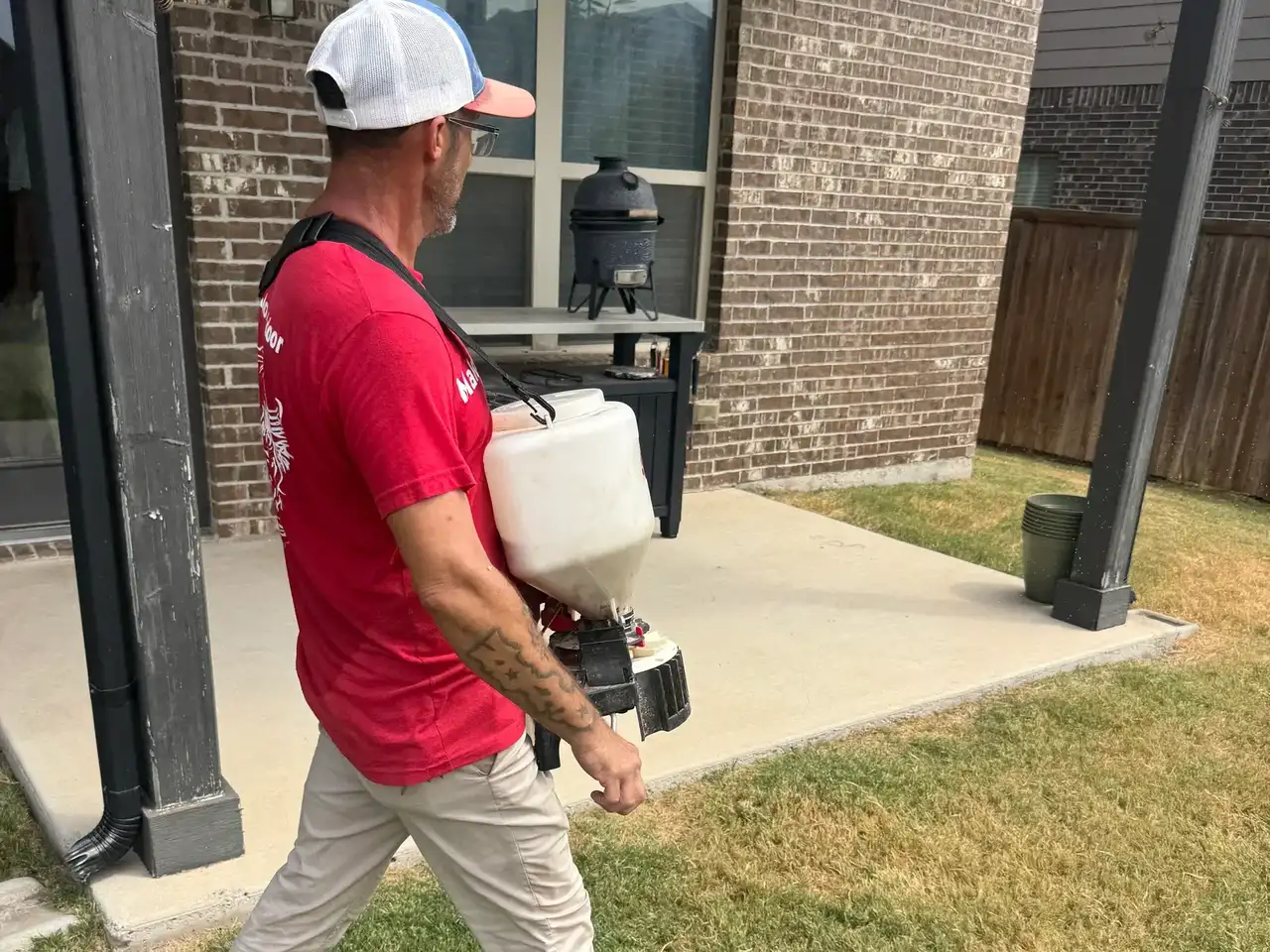
Turf, beds and the building line
The lawn is treated, then the bed edges and the band against the structure where landscaping meets brick. Plantings pressed tight to the wall get extra attention, because they are harborage and a route indoors at the same time.
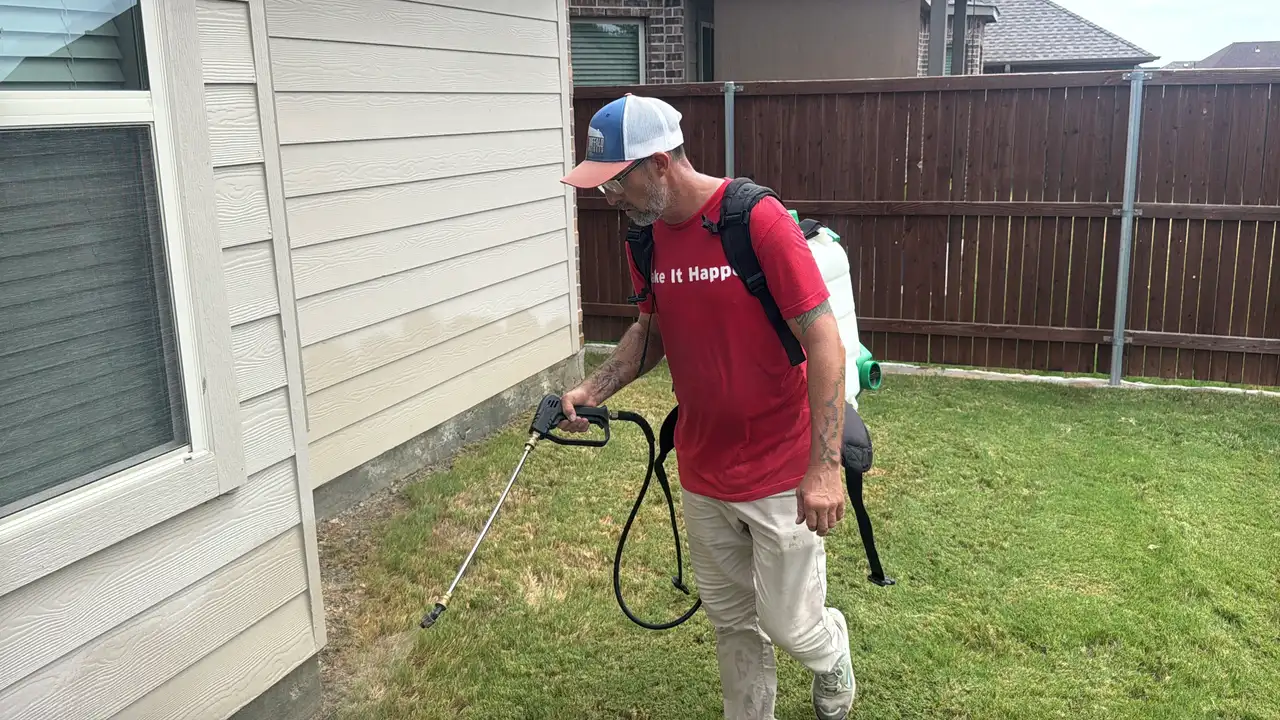
Dry time across a big property
Roughly two hours in summer heat, counted from the last area treated rather than the first. Pets and children stay off until then, and nothing is ever applied to the animal itself.