
UNDER THE OAKS
Why deep canopy stretches the season at both ends
Shade is a climate, not a decoration. Under the mature oaks and pecans of Westover Hills the ground stays several degrees cooler and considerably damper than an open lawn two streets away, and that microclimate is what allows adult mosquitoes to survive an August afternoon and to hang on later into the fall. Estate properties here start biting early in spring and stay busy after other towns have quietened down.
Layered landscaping compounds it. Broad irrigated beds, stone walls, hedging against the house and dense plantings between properties all hold still, humid air at ground level, which is precisely the resting habitat the fog is designed to strip out. Visits run every 21 days from April through September, and the same stop treats turf and bed edges for fleas and ticks.
ESTATE LOT PRICING
How a large property gets priced
Off the lot, always, and never off the house, which matters a great deal in a town of large homes on large grounds. Half an acre is $89.95 a visit and the published bands climb to $129.95 at just under an acre; past roughly 47,000 square feet the table stops and the property gets quoted on what is genuinely there, from how much canopy has to be reached to how far the beds run.
Charges land per visit, so no summer is paid for in advance and there is no contract binding you to one. Nothing is charged to start and nothing is charged to stop. If a treatment does not carry the full interval, the return is free. A Westover Hills address entered at /instant-quote will produce a figure or tell you it needs quoting.
Lots from 22,001 to 27,000 sq ft
$89.95 a visit
About half an acre
Lots from 32,001 to 37,000 sq ft
$109.95 a visit
Common on the shadier streets
Lots from 42,001 to 47,000 sq ft
$129.95 a visit
The top published band
Over 47,000 sq ft
Quoted for the property
Where most estate lots land
Every number on this page comes from our published price list. Westover Hills homes get the same table as everyone else; the instant quote reads your square footage and lot size and hands you your own line.
THE FINE PRINT
What heavy shade costs you, even treated
A yard this shaded will never be a yard this dry. Canopy that keeps a Westover Hills lawn cool also keeps the soil under it damp, and damp shade regenerates habitat between visits faster than an open sunny lot does. Treated properties here are markedly better than untreated ones and still busier than a bare new-build lot across town, and that is the trade that comes with the trees.
Irrigation makes the same point. Extensive automatic watering across a large landscape keeps the ground wet enough to support adults right through the summer, and no application outruns a sprinkler schedule. Trimming the run time on the zones that never dry is free and it helps more than an extra visit would.
The interval is the third thing. Product gives about three weeks at peak and less after a hard storm, which is the reason visits are spaced at 21 days and the reason anything that reappears early is treated again at no cost. We would rather publish that number than let you discover it in week four.
ALL OF IT OR PART
Treating the whole grounds versus the entertaining areas
Plenty of large-property owners ask whether we can just do the pool deck and the terrace, and the honest answer is that it rarely works and it does not save money. The price is set by the lot, so a partial treatment costs the same as a full one, and the untreated half of the grounds carries on supplying adults that reach the terrace within an evening.
Where selective treatment does make sense is in what gets deliberately left alone: pollinator plantings, a vegetable garden, a pond, anything in bloom. Those are mapped as no-spray zones and worked around, which is a very different thing from skipping the back acre. If cost is the concern on a Westover Hills property, the lever is how many visits you take across the season, not how much of the yard the technician walks.
FIRST TIME ON SITE
How a first estate-lot appointment works
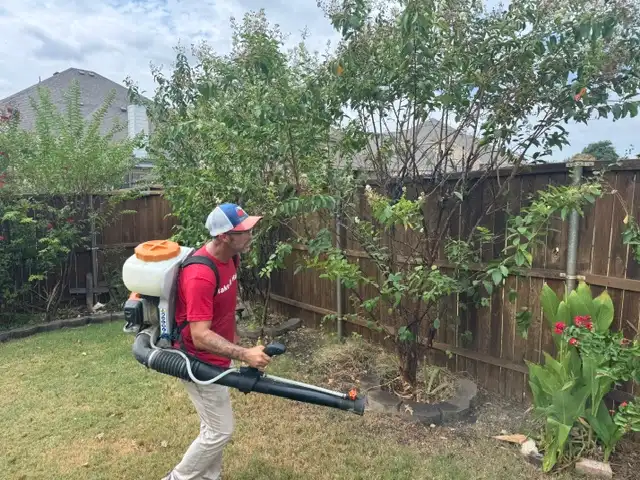
The no-spray conversation
Before anything is applied we ask what must be avoided: hives, pollinator beds, ponds, koi, kitchen gardens and specimen plantings in flower. On a property with this much landscaping that list is long, and getting it right on visit one sets the record for every visit afterwards.
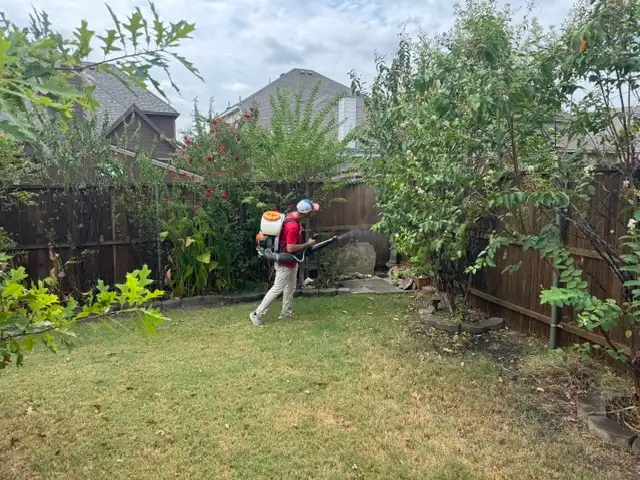
Canopy, hedges and wall lines
The fogger is then worked up into the tree canopy and through hedge runs, deep beds, the shaded faces of stone walls and any structure that holds shadow all day. Lawn gets very little, because the adults are not in it while the sun is up.

Water across the grounds
Fountains that have stopped circulating, saucers, gutters loaded with oak litter, low ground that stays soft and drains that hold: each gets flagged and, where it cannot be emptied, larvicided. Gate access is all that is needed, and a message goes out ahead of the visit.