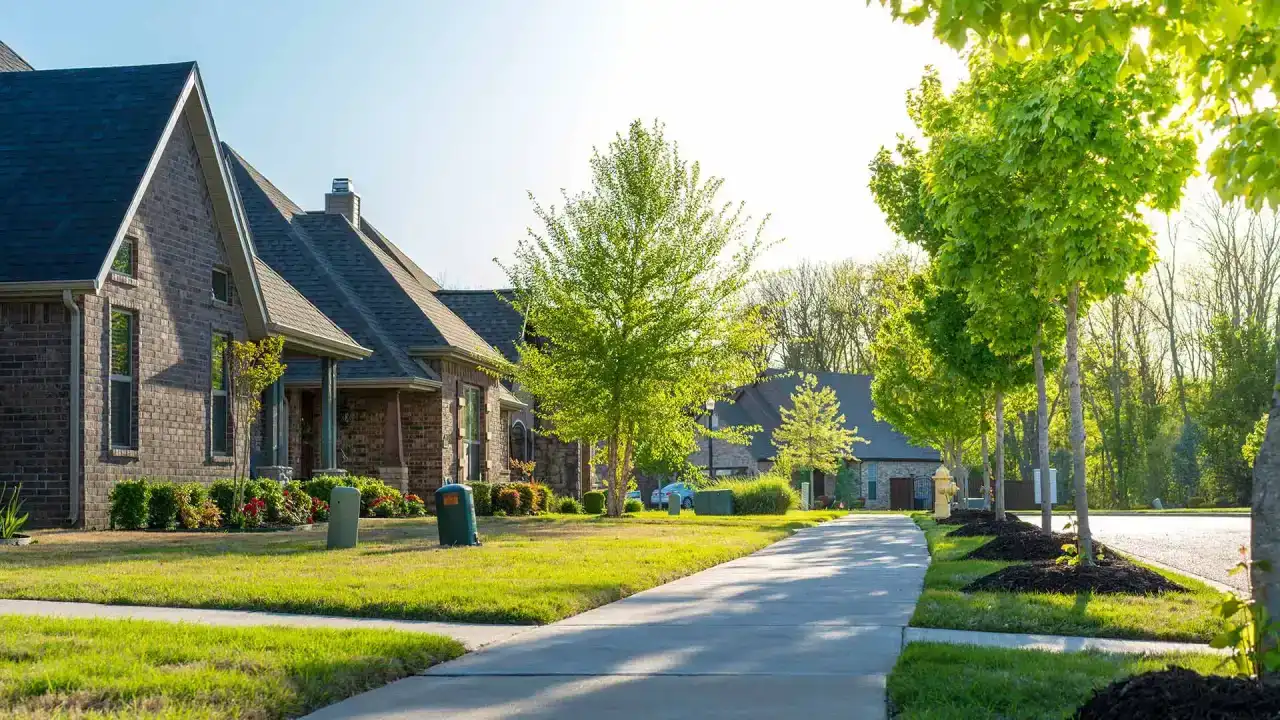
ESTATE LOTS, HEAVY SHADE
Why rodent pressure runs high on a Westover Hills property
Cover. Westover Hills sits under some of the densest oak and pecan canopy in Tarrant County, and rats travel where they cannot be seen. Layered beds, stone walls and irrigated plantings that run right up to the brick are a shaded corridor from the back of the lot to the weep holes, and the nut crop overhead feeds them all autumn.
Large houses also have more of everything a rodent can use: longer roof lines, more utility penetrations, several exterior doors, pool equipment lines and detached structures. A single open soffit return on a long eave is enough, and on an estate lot there might be forty feet of eave nobody has looked at closely in years.
Our approach does not change with the size of the house, only the time it takes. Locate the entries in use, seal them, trap the animals that are already inside, then come back and confirm.
PRICING ON A LARGE HOME
The rodent line is $25; the base plan follows the square footage
The add-on is a flat $25 a month regardless of the house, but it only attaches to a year-round plan, and on Westover Hills homes the plan price sits toward the top of the table. A 3,000 to 4,500 square foot house pays $38 to $46 for Home Defender, and a 4,500 to 6,000 square foot house pays $46 to $54, so rodents included you are looking at roughly $63 to $79 a month.
Anything over 6,000 square feet is quoted after we see it, because the eave line and the number of penetrations vary too much to price from a table. Call or text (817) 984-8611 with the address and we will give you the figure before you agree to anything; there is no signup fee and no contract to sign.
Rodent add-on
$25 a month
Flat, attached to either year-round plan
Home Defender, 3,000–4,500 sq ft
$38–$46 a month
The smaller Westover Hills houses
Home Defender, 4,500–6,000 sq ft
$46–$54 a month
Common on the estate lots
Over 6,000 sq ft
Quoted
Long eave lines take a walk-through to price
Every number on this page comes from our published price list. Westover Hills homes get the same table as everyone else; the instant quote reads your square footage and lot size and hands you your own line.
THE LIMITS, STATED PLAINLY
Three things sealing a Westover Hills house cannot change
Sealing does not clear the canopy. If oak and pecan limbs rest on the roof, rats will keep arriving at the fascia and testing it, and the arborist bill to get those limbs a few feet off the shingles is the most effective rodent money a Westover Hills owner can spend. We will mark the contact points; we do not climb with a saw.
It also does not reach into the landscaping. Dense groundcover against the foundation, deep mulch and stone walls with open joints are harborage we can point out and treat around, but they stay until you or your landscaper pull them back. A rat living in a wall cavity twelve feet from the house is a permanent applicant.
Finally, this is not a chemical job. There is no product in the perimeter tank that a rat notices, and the plan's insect treatment does nothing to the rodent traffic. Exclusion is copper mesh, sealant, hardware cloth and patience.
SEAL THE HOUSE OR TREAT THE LOT
Treating the grounds versus closing the building
Owners of big lots often ask whether we can treat the whole property for rats the way we fog it for mosquitoes. We cannot, and nobody honestly can, because rodents are not controlled by area treatment; open bait scattered across acreage is illegal to use that way and a hazard to dogs and owls besides. The rodent work concentrates on the building envelope, where the problem actually becomes yours.
The trade-off is that a Westover Hills lot will always have rats on it somewhere. The measure of success is a house they cannot enter, plus locked stations on the runways they use to approach it, not an empty garden. If you want the garden quieter too, cutting the food and the cover does more than any station.
THE WALK
How the first visit goes on a Westover Hills estate
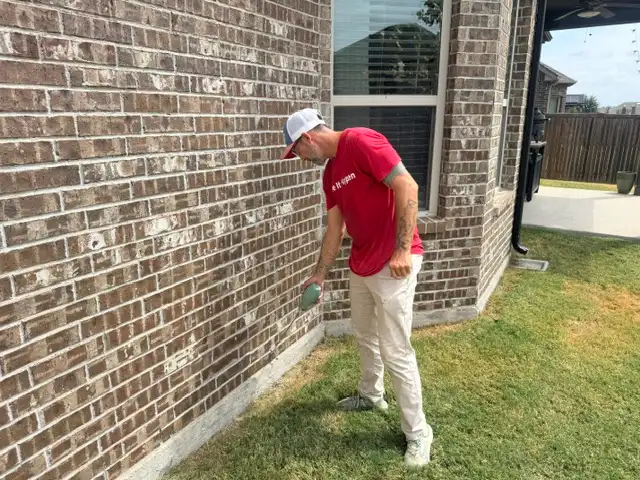
The perimeter, including the long way round
We walk the whole foundation, not just the front, checking weep holes, stone-wall joints where they meet the brick, pool-equipment lines and the base of every exterior door. Anything showing rub marks or droppings is flagged.

Roof line and canopy contacts
Every limb touching or overhanging the roof gets noted, along with soffit returns, gable vents and the flashing where roof planes meet. On a large house this is often where the working entry turns out to be.
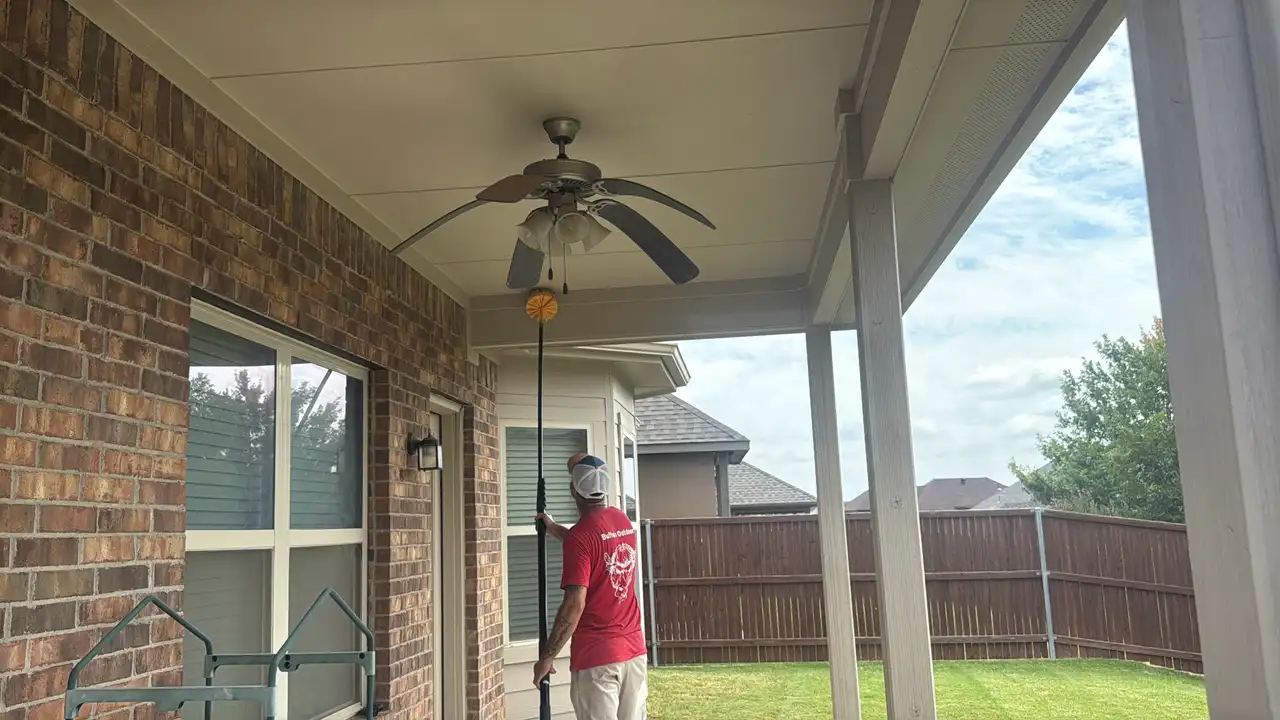
Interior runways and the plan
Attic, garage and any accessible detached structure get read for runways and nesting, and traps or tamper-resistant stations go on those paths. You get a written list of what we sealed and what needs the arborist or landscaper, and a follow-up date.