UNDER THE OAKS, 76107
What the canopy does to a Westover Hills house
Shade is shelter. Westover Hills sits beneath some of the heaviest tree cover in Tarrant County, and mature oaks and pecans keep the ground damp, the leaf litter deep and the walls of a house in permanent shadow. Spiders, roaches, crickets, pillbugs and millipedes all prefer exactly those conditions, and they are the pests the Home Defender Plan was built for.
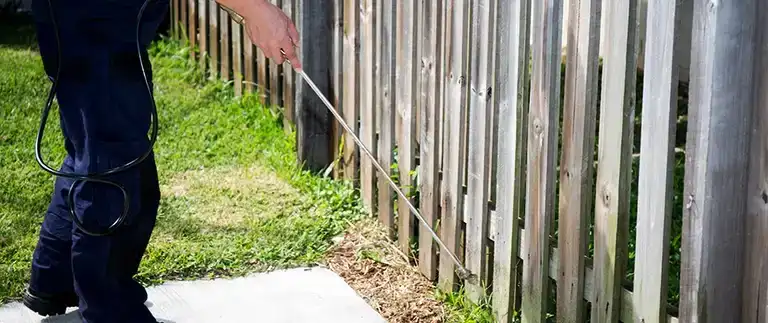
The landscaping supplies the rest. Layered beds, stone walls and irrigated plantings running up to the elevation give everything a covered route to the foundation, and the weep holes along the bottom course are where that route ends. Four visits a year treat the wall, the eave line and the ground beside both.
ESTATE-SIZED PRICING
Why Westover Hills homes sit at the top of the table
The plan prices on the square footage of the house, and the houses here are large, so most fall into the $46 to $54 band or sit above the table altogether. Past 6,000 square feet there is no band to read from; we measure the building and quote it.
The acreage around the house is not what you are paying for. A large property still prices on the structure, which is worth knowing if you assumed a big lot automatically meant a big bill. Elevation size is the lever, and it is the only one.
4,500–6,000 sq ft
$46–$54 a month
Where many houses here fall
Over 6,000 sq ft
Quoted
The building gets measured, not banded
Complete upgrade
$62–$73.50 a month
Whole-yard version at those sizes
Copper mesh sealing
Add-on, quoted
Never folded into the monthly plan
Every number on this page comes from our published price list. Westover Hills homes get the same table as everyone else; the instant quote reads your square footage and lot size and hands you your own line.
SAID PLAINLY
Three things this will not do on an estate lot
Twenty-five feet does not cross a Westover Hills yard. The granular ring reaches the ground nearest the house and stops, so if the trouble is out among the trees, the base plan is not the right purchase. Complete Home & Lawn Defense covers the whole property and runs $40 to $73.50 a month depending on the size of the house.
Deep canopy makes this a mosquito town, and this is not a mosquito program. Still, shaded, humid ground is where mosquitoes wait out the daylight, and a foundation barrier never touches them. The answer is the 21-day program from April through September, and that one is priced on the lot rather than on the building.
It also will not tidy your landscaping for you. Leaf litter banked against a stone wall, mulch heaped over the slab and shrubs pressed into the brick keep feeding the population however carefully the perimeter is treated. We will say which ones matter; shifting them is the homeowner's half of the work.
MESH OR MORE PRODUCT
Is closing the weep holes worth an extra line on the bill?
It depends on the age of the brick and how often something turns up indoors. Delta Dust goes into every weep hole on every visit as part of the plan, so those openings are treated whether or not you buy anything further, and for most houses that is enough.
Copper mesh is a different kind of work: it physically blocks the opening while letting the wall drain, and unlike steel wool it will not rust and stain your brick. Where scorpions or mice keep reappearing, paying once to shut the holes beats treating the same route four times a year indefinitely. It is quoted separately and never rolled into the monthly figure.
WALKING A WESTOVER LOT
Where the technician starts on a large property
Mapping the no-spray areas
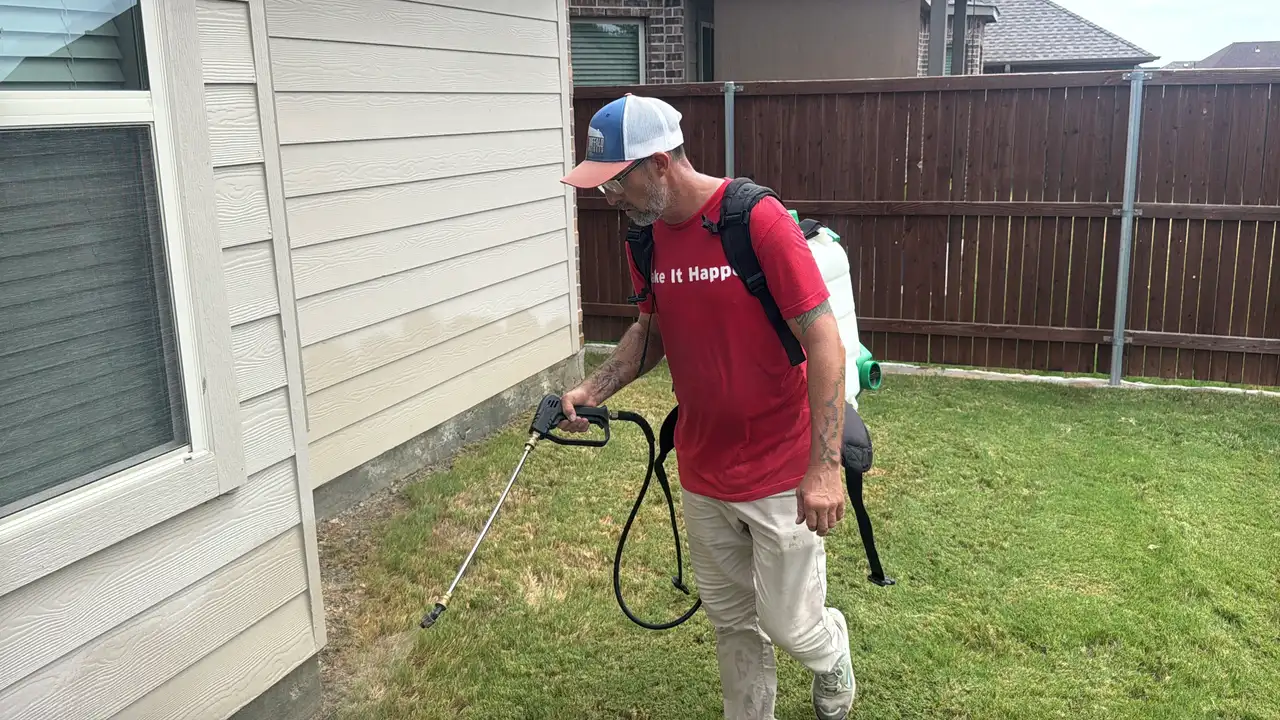
Before anything goes down we ask what you would rather we left alone: a vegetable bed, a pond, a particular ornamental planting. Large Westover Hills landscapes usually have two or three, and mapping them at the start is easier than explaining afterwards.

The wall and the eave line
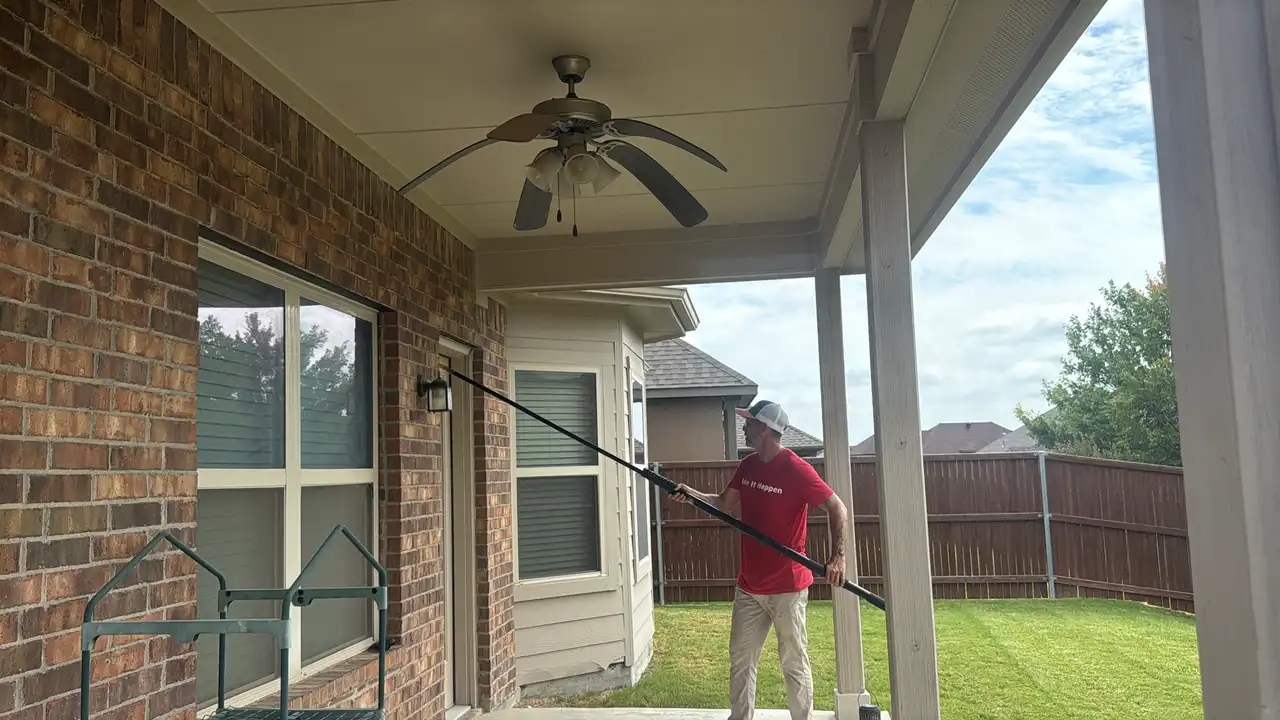
A liquid band runs the full foundation and about three feet up, then a web pole works the eaves, soffits and door frames. Under heavy canopy that overhead pass counts, because webs and wasp nests rebuild fastest in corners the sun never reaches.
Weep holes, ring and bait
Delta Dust goes into each weep hole along the bottom course, granular is broadcast roughly 25 feet out through beds and turf, and fire ant bait is spread on the same visit. Fire ant treatment belongs to both plan tiers rather than being sold on the side.