
PASTURE ON EVERY SIDE
Ticks are the Annetta problem; fleas ride along
Ask an Annetta household what bites and the answer is usually ticks before fleas. An acreage lot south of Aledo has hay, brush or pasture on most of its boundary, and that tall grass is the tick habitat; they climb a stem, hold on, and drop onto whatever walks the fence line, which on a working property is people, dogs and horses every day.
Fleas come second but they come. Barns, shops and woodpiles give them the dark, dry, protected ground larvae need, and the barn cat or the dog that sleeps in the tack room is the delivery system into the house.
We treat the yard you actually live on, the band around the house and a buffer where the mowing stops and the pasture starts, every 21 days from April to September. Treating the field itself is not part of it, and neither is treating the animals; your veterinarian's prevention is the piece that keeps a treated yard from being undone by one dog.
ACREAGE PRICING, ANNETTA
What an Annetta place pays, and what quoted means
Annetta lots sit at the top of the per-visit table or past it. A property between about three-quarters of an acre and an acre falls into the $99.95 to $129.95 bands, and anything larger than roughly an acre of treatable ground gets a quoted figure after we see it.
The word quoted is not a way to hide a number. It means we walk the place, agree on where the treated envelope ends, and give you a fixed per-visit price for that area before you say yes. Pasture, hay and paddocks are excluded from the count, so a five-acre Annetta property is not billed as five acres of lawn. No agreement is signed and stopping costs nothing.
27,001 to 32,000 sq ft
$99.95 a visit
Smaller Annetta homesites around three-quarters of an acre
37,001 to 42,000 sq ft
$119.95 a visit
Close to an acre of yard
42,001 to 47,000 sq ft
$129.95 a visit
The largest banded size, right at an acre
Over 47,000 sq ft
Quoted
Most of Annetta, priced on the lawn and buffer, not the pasture
Every number on this page comes from our published price list. Annetta homes get the same table as everyone else; the instant quote reads your square footage and lot size and hands you your own line.
WHAT WE WILL NOT PRETEND
Limits of a yard treatment on an Annetta acreage
An indoor flea problem does not respond to anything we do outside. When fleas are already breeding in the house, the eggs, larvae and pupae are in the carpet and the bedding, and a treated lawn changes nothing about them; a hot wash for the bedding, steady vacuuming and a vet product on every animal in the house are what clear it. Our outdoor visits then stop the yard from restocking the house once it is clean.
We also will not sell you a treatment of the pasture. Product broadcast over open hay ground is a lot of money for something that ticks re-colonize from the neighbor's brush within weeks. The buffer along the fence is where a treatment pays for itself; past that line, keeping the grass cut short is worth more than spraying it.
Livestock areas are off limits for us on purpose. Pens, troughs, feed storage and anywhere horses graze get mapped as no-spray zones before the first visit, which means the treated area on an Annetta property is smaller than the deed, and we say so up front.
MOW THE EDGE OR TREAT IT
Is keeping the fence line mowed enough on its own?
Mowing does more than most people expect. Ticks need tall stems to quest from, and a fence line kept at lawn height all season carries far fewer of them, so an Annetta household with one indoor dog and no history of bites might reasonably start there for free.
The catch is the strip you cannot reach: the far side of the fence, the brush along the tree line, the tall grass around the barn. Those keep supplying ticks to the mowed area, so mowing lowers the number and treating the buffer lowers it again. Where there are kids, horses and dogs crossing that line daily, doing both is what we recommend, and where there are not, we will tell you mowing may be all you need.
FIRST TIME OUT, ANNETTA
How a first visit on acreage south of Aledo goes
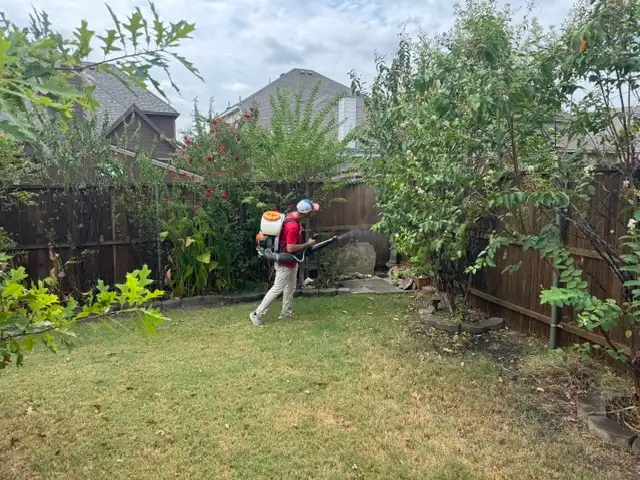
Walking the boundary first
We start at the fence, not the front door. Where the mowed yard meets pasture, hay or brush is where the ticks come from, and that walk decides how wide the buffer runs and which outbuildings need attention.
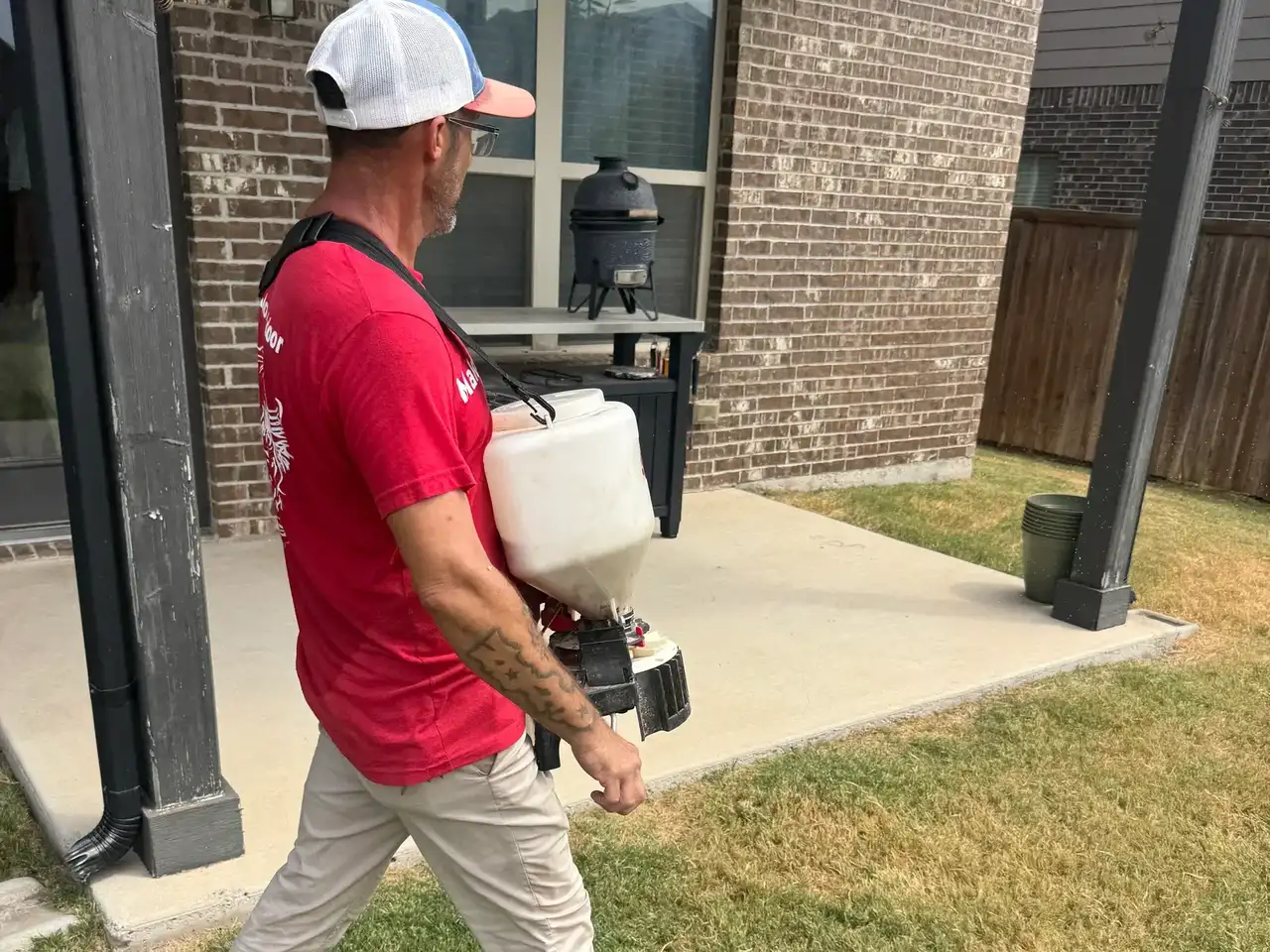
Marking the no-spray zones
Anything the horses or livestock use is mapped out before a nozzle is opened: pens, troughs, feed, and the grass they graze. If the dogs kennel in a barn, we ask about it, because a barn is a flea nursery and a kennel is the delivery route.
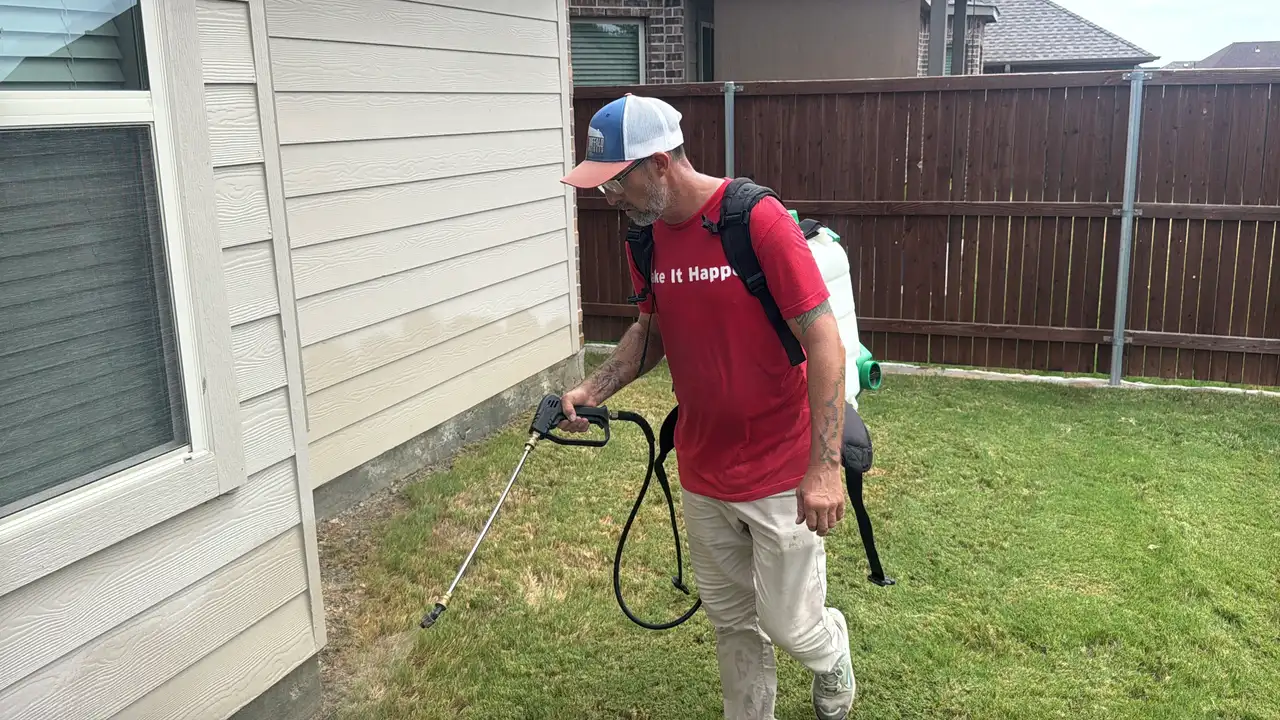
Lawn, house band and buffer
The turf around the house is treated in full, then a band along the foundation, then the buffer strip at the boundary. In summer heat the application is dry in about two hours, and until then animals stay off it.